

When a child, my dreams rode on your wishes, I was your son, high on your horse, My mind a top whipped by the lashes Of your rhetoric, windy of course.
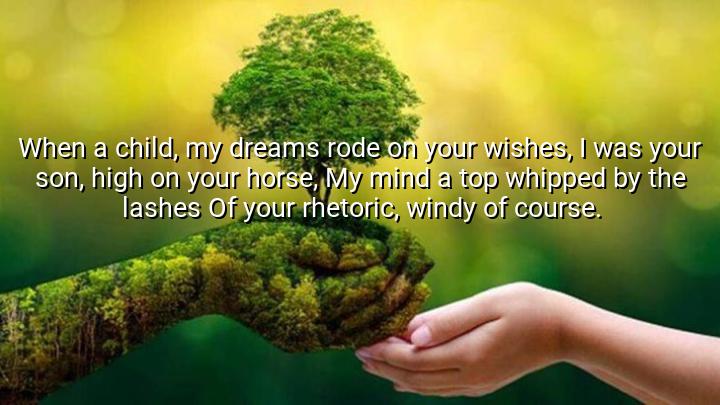




Stephen Spender’s quote explores the relationship between a child and their parent (likely the father), reflecting on the impact that parental influence and expectations have on a young person’s dreams. The line “my dreams rode on your wishes” suggests that the child’s aspirations are shaped or even dictated by the desires and hopes of their parent. This highlights the dynamic in which the child’s ambitions are not entirely their own but are influenced by the wishes of someone they look up to, often a parent or a figure of authority.
The imagery of being “high on your horse” evokes a sense of being elevated or exalted through the parent’s expectations, as though the child is riding on the parent’s metaphorical horse of ambition. The child’s identity and dreams are elevated or defined by the parent’s views, giving the child a sense of importance and purpose. However, the line also carries a sense of dependency, where the child’s sense of self is intertwined with the parent’s desires, perhaps at the cost of the child’s own individuality or independent thinking.
The reference to the mind being “a top whipped by the lashes of your rhetoric” suggests that the child’s thoughts and feelings are subject to the forceful and often unquestioning influence of the parent’s words or persuasive speech. Rhetoric here represents the persuasive power that the parent holds, shaping the child’s mind through language that is “windy”—perhaps empty or manipulative—further contributing to the child’s feeling of being controlled by external forces rather than developing their own agency.
Ultimately, Spender’s quote reflects the psychological struggle of growing up under the heavy influence of a parent’s wishes and rhetoric, which can overshadow the child’s own natural dreams and desires. It highlights the tension between fulfilling parental expectations and seeking personal freedom and individuality. The quote captures a moment of reflection on the way dreams can be shaped by external forces and how the child, in the process of growing up, comes to understand the impact of this influence.

AAdministratorAdministrator
Welcome, honored guests. Please leave a comment, we will respond soon