

What's clear - and exciting - is that communication for social change is growing.
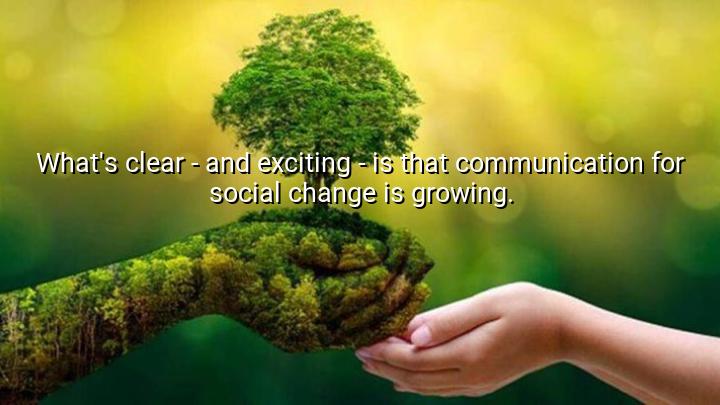




Aaron Koblin’s quote, "What's clear - and exciting - is that communication for social change is growing," highlights the increasing role of communication in driving social change. Koblin is emphasizing that, in today’s world, the ability to connect people and share ideas is expanding, creating new opportunities for social transformation. The use of the word "exciting" conveys his optimism about the growing influence of communication as a powerful tool for advocacy, activism, and progress.
Koblin suggests that the evolving landscape of digital communication—such as social media, online platforms, and other technological innovations—has opened up new avenues for people to come together, spread awareness, and work toward social change. As more individuals and groups use these tools, the potential to create positive societal impact through collaboration and collective action becomes greater. This shift in communication enables more voices to be heard and contributes to empowerment and activism on a global scale.
The excitement in the quote comes from recognizing that communication is no longer limited by geography, social status, or traditional media channels. Instead, it’s now more inclusive and accessible, allowing for a more diverse range of voices and ideas to influence public opinion and policy. Koblin acknowledges that this shift in how we communicate opens up new possibilities for people to address issues such as inequality, justice, and environmental concerns.
Ultimately, Koblin’s words reflect a belief in the transformative power of communication as a tool for change. As technology advances and global networks expand, the potential for collective action grows, making it easier to mobilize people for causes that can lead to meaningful societal change.

AAdministratorAdministrator
Welcome, honored guests. Please leave a comment, we will respond soon