

What we call happiness in the strictest sense comes from the (preferably sudden) satisfaction of needs which have been dammed up to a high degree.
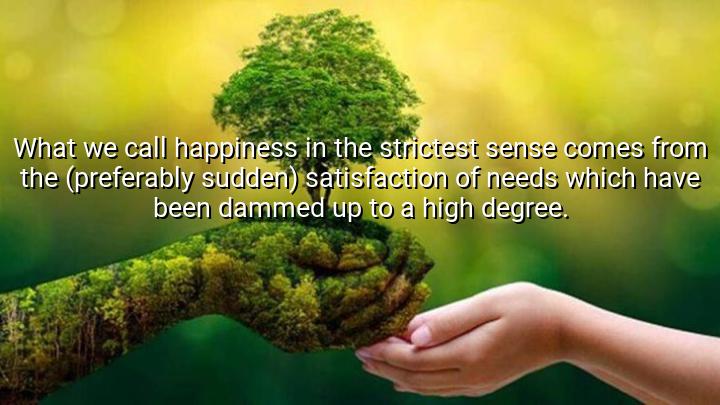




The quote by Sigmund Freud, "What we call happiness in the strictest sense comes from the (preferably sudden) satisfaction of needs which have been dammed up to a high degree," explores his psychological view of happiness as being tied to the relief of pent-up needs or desires. Freud suggests that true happiness often arises when a person’s unfulfilled needs or cravings, which have been repressed or delayed, are suddenly satisfied. The intensity of the relief from these unmet desires is what generates a strong sense of happiness, especially when the fulfillment happens unexpectedly or quickly.
Freud's concept of repressed needs refers to the psychological mechanism in which desires or wants are not immediately met, often due to societal, personal, or emotional constraints. These needs build up over time, creating a sense of internal tension or discomfort. When these needs are finally satisfied—particularly in a sudden and unexpected way—the resulting feeling is pleasure and happiness. This aligns with Freud’s broader ideas about pleasure principle, where human beings are driven by the desire to seek pleasure and avoid pain.
The quote also suggests that the degree of happiness is linked to the intensity of the need being satisfied. For example, the greater the emotional build-up or the longer the delay in fulfilling a need, the greater the relief and, consequently, the greater the happiness when the need is finally addressed. This type of happiness is, therefore, reactive, arising from the cessation of tension rather than a sustained state of joy or contentment.
In essence, Freud's quote frames happiness as a temporary, situational experience that is often contingent upon the sudden release of pent-up desires. This view suggests that while happiness can feel intense and rewarding, it is often fleeting and dependent on the fulfillment of specific needs, rather than a long-term sense of well-being. It offers insight into how human beings are motivated by the desire to satisfy unmet needs, which, in turn, shapes our understanding of happiness.

AAdministratorAdministrator
Welcome, honored guests. Please leave a comment, we will respond soon