

What is design? It's where you stand with a foot in two worlds - the world of technology and the world of people and human purposes - and you try to bring the two together.
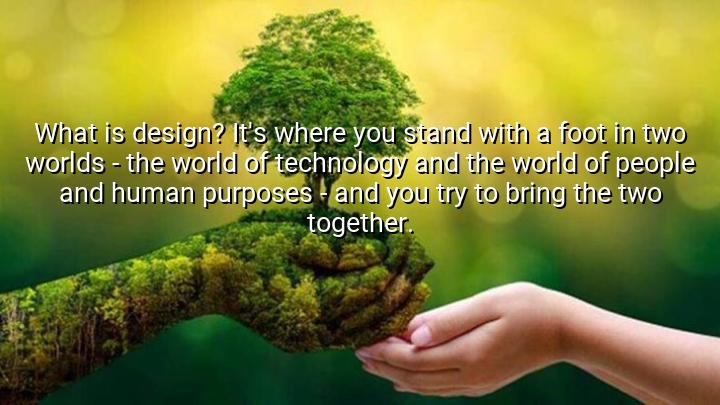




The quote "What is design? It's where you stand with a foot in two worlds - the world of technology and the world of people and human purposes - and you try to bring the two together" by Mitch Kapor, an influential entrepreneur and software designer, captures the essence of what design truly represents in the modern world. Kapor emphasizes that design is the intersection of technology and human needs, where the goal is to create solutions that not only work effectively but also serve people's purposes. This dual focus on both the technical and human aspects highlights the importance of balancing functionality with usability.
Kapor’s statement suggests that design involves a delicate balance between understanding the capabilities of technology and the requirements of people. Designers must not only be experts in their field’s technical aspects but also sensitive to how their designs affect users' experiences and interactions. The true challenge lies in bridging the gap between a machine’s capabilities and human desires, ensuring that technology serves humanity rather than the other way around.
The quote underscores that design is not simply about making something visually appealing or technically advanced, but about creating meaningful connections between people and the tools they use. For Kapor, this could mean designing software that is both powerful in its technical functionality and intuitive or accessible to users. It also speaks to the role of designers as mediators, tasked with understanding and merging the demands of both technology and human behavior.
Ultimately, Kapor’s words call attention to the complexity of modern design and its vital role in shaping our interactions with technology. The act of bringing together these two worlds—technology and human needs—is central to creating innovative solutions that are not only functional but also resonate with the people who use them, creating a more user-centered and effective design.

AAdministratorAdministrator
Welcome, honored guests. Please leave a comment, we will respond soon