

We've got the right to vote, but what does it mean? People now want to have the right to a job, the right to education, the right to medical services.
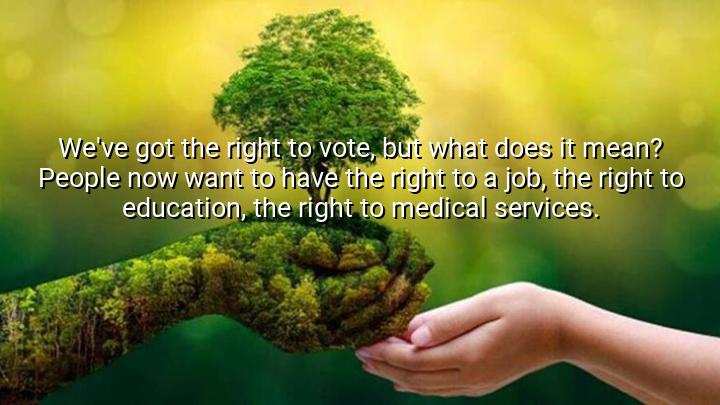




The quote by John Kani explores the broader meaning of rights in society, going beyond the right to vote. While voting is a fundamental democratic privilege, Kani questions its true significance if people lack access to other essential resources. He highlights the growing expectation that citizens should also have the right to a job, the right to education, and the right to medical services, framing these as crucial elements for meaningful participation in society.
Kani’s statement emphasizes the connection between political rights and social and economic rights. The right to vote alone may not be sufficient if people are unable to meet their basic needs or improve their circumstances. By linking voting to access to employment, education, and healthcare, he underscores the importance of equality, opportunity, and human dignity as foundations for a truly democratic society.
The origin of this quote comes from Kani’s perspective as a South African actor, playwright, and social activist, who has often engaged with themes of justice, inequality, and human rights. Living through periods of social and political struggle, Kani reflects on how democracy must extend beyond formal political participation to include access to essential services that empower individuals to thrive.
Ultimately, this quote challenges society to rethink what it means to have rights. Kani reminds us that voting, while essential, is only one aspect of a just society. True empowerment comes from ensuring that people also have access to employment, education, and healthcare, making rights both practical and transformative.
If you want, I can also create a shortened, impactful version with all the keywords bolded for a speech or social media post.

AAdministratorAdministrator
Welcome, honored guests. Please leave a comment, we will respond soon