

We shape our buildings; thereafter they shape us.
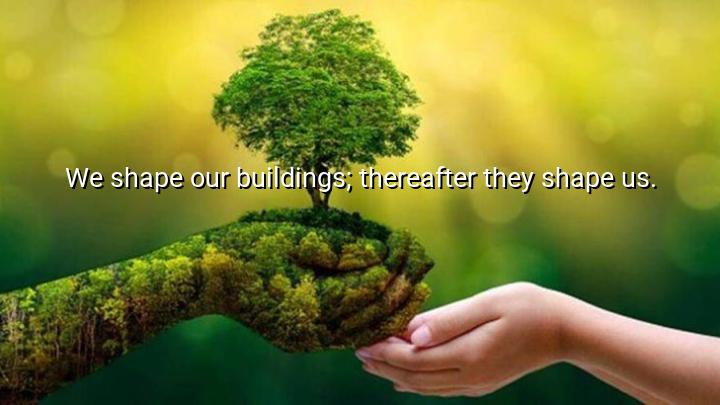




The quote "We shape our buildings; thereafter they shape us" by Winston Churchill speaks to the powerful, reciprocal relationship between humans and the built environment. Initially, we create buildings—designing them according to our needs, values, and aspirations—but once constructed, these structures begin to influence our behavior, thoughts, and interactions. In essence, architecture not only reflects culture but also becomes a force that molds it in return.
Churchill delivered this statement in 1943 during a speech to the House of Commons, arguing in favor of reconstructing the bombed chamber of the British Parliament in its original design. His intention was to emphasize how the physical form of a space—its layout, acoustics, and symbolism—can impact the way democracy functions and how leaders deliberate. The quote conveys that architectural choices are not neutral; they carry consequences for how people live, work, and govern.
By asserting that buildings "shape us," Churchill acknowledged the enduring psychological and social effects of design. From schools and churches to homes and government halls, architectural environments influence how people feel, interact, and perform. A well-designed space can foster collaboration, inspiration, or transparency, while a poorly designed one might cause discomfort, inefficiency, or alienation.
Ultimately, Churchill’s quote is a timeless reminder that architecture matters—not just in function, but in form, spirit, and legacy. It challenges us to be thoughtful creators of our environments, knowing that the spaces we build will in turn shape the societies we become.

AAdministratorAdministrator
Welcome, honored guests. Please leave a comment, we will respond soon