

We must shape a restorative justice system that does not seek to criminalize whole communities, but instead creates opportunities for prevention and integration. Most importantly, this system must be grounded in the fundamental premise that all people are innocent until proven guilty and that all of us deserve a fair second chance.
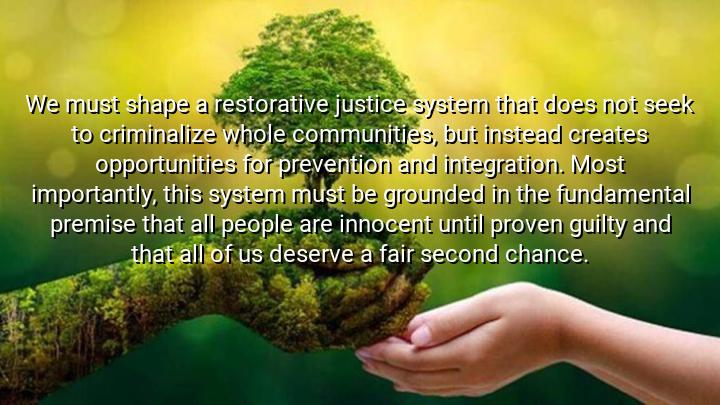




In this quote, Laphonza Butler calls for a shift in how the justice system functions, focusing on the need for a restorative justice system. Rather than criminalizing entire communities, she advocates for a system that emphasizes prevention and integration, aiming to address issues before they escalate and offering people opportunities to reintegrate into society rather than labeling them as criminals. This approach reflects a belief in rehabilitation over punishment and acknowledges the impact of systemic inequalities.
Butler stresses the importance of grounding the justice system in the principle that "all people are innocent until proven guilty." This foundational idea of innocence reflects the value of fairness and due process within the legal system. By emphasizing this premise, she advocates for a system that doesn't pre-judge individuals based on assumptions or past behaviors, but instead upholds the belief in the presumption of innocence for everyone.
Additionally, Butler's quote highlights the need for second chances. She emphasizes that everyone deserves the opportunity for redemption, regardless of their past mistakes. This resonates with her broader vision of a justice system that offers fairness and equal treatment, not only for those who are incarcerated but for anyone seeking to rebuild their lives. It also touches on the idea that reintegration into society can be a powerful tool for long-term societal change, as opposed to punitive measures that may further alienate individuals.
Ultimately, Butler’s statement is a call to action to create a justice system that is compassionate and inclusive, promoting opportunities for those who have been marginalized or impacted by the criminal justice system. It suggests that real progress can be made when justice is not just about punishment, but about fostering healing, growth, and opportunity for everyone.

AAdministratorAdministrator
Welcome, honored guests. Please leave a comment, we will respond soon