

We know what we are, but know not what we may be.
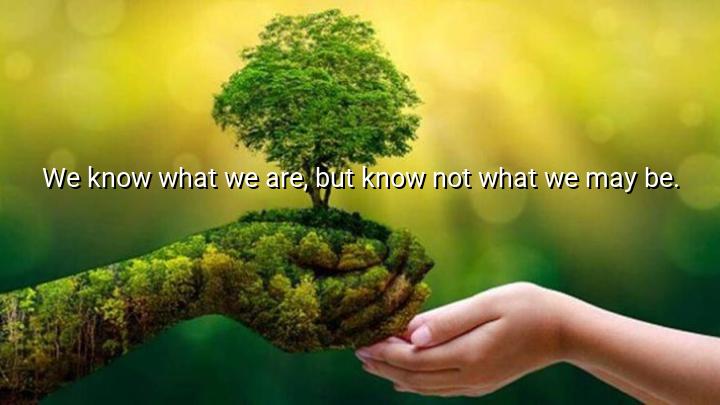




William Shakespeare’s quote, "We know what we are, but know not what we may be," reflects on the uncertainty and potential of human nature. Shakespeare suggests that while we are aware of our current identity and circumstances, the future holds endless possibilities for growth and transformation. This quote acknowledges that our present state is not a fixed or final version of ourselves, and the potential for change is both mysterious and unpredictable.
The first part of the quote, "We know what we are," emphasizes our understanding of who we are in the present moment—our strengths, flaws, and limitations. It speaks to the idea that our current self-awareness shapes how we approach life. However, the second part, "but know not what we may be," introduces the idea that the future is full of possibilities. We cannot fully predict the person we will become, as our potential is shaped by a wide range of external factors and personal decisions.
Shakespeare’s words also encourage reflection on personal growth. While we may have a clear understanding of where we are today, the journey ahead could lead us down paths we never imagined, unlocking potential that lies dormant within us. This aligns with the human experience of change and evolution, where we continuously discover new aspects of ourselves.
Ultimately, this quote suggests that we are more than the sum of our current identity; we are constantly evolving and capable of becoming something greater. Shakespeare’s message encourages hope and openness to the unknown, reminding us that while we may understand who we are now, the future holds untapped potential waiting to be explored.

AAdministratorAdministrator
Welcome, honored guests. Please leave a comment, we will respond soon