

We know that without food we would die. Without fellowship, life is not worth living.
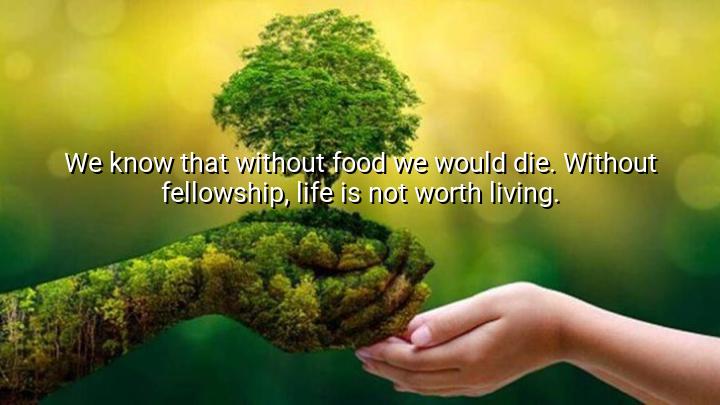




This quote by Laurie Colwin beautifully captures the dual essentials of human life: food and fellowship. When she states, “We know that without food we would die,” she acknowledges the physical necessity of nourishment for survival. But she goes further to add, “Without fellowship, life is not worth living,” suggesting that beyond our bodily needs, we also require emotional and social connections to truly feel alive and fulfilled.
Colwin is emphasizing that human connection is just as vital as sustenance. While food keeps us alive biologically, companionship, community, and shared experiences give life meaning and joy. The quote reflects a belief that eating is not only a functional act but also a deeply communal one, where the act of gathering and sharing meals plays a central role in nurturing the soul as much as the body.
The origin of this quote is found in Colwin’s writing, particularly her food essays collected in works like Home Cooking. As both a novelist and food writer, she was known for blending warmth, wit, and deep insight into everyday domestic life. Her reflections often celebrated the intimate relationship between cooking, eating, and love, viewing the kitchen as a place of both sustenance and storytelling.
Ultimately, Colwin’s quote reminds us that life is about more than survival—it’s about connection. In her view, the act of breaking bread together goes beyond nutrition; it is about creating a sense of belonging, forming bonds, and experiencing the shared joy of being with others. Her words celebrate the simple but profound truth that both food and fellowship are essential to a life well lived.

AAdministratorAdministrator
Welcome, honored guests. Please leave a comment, we will respond soon