

We have to base architecture on the environment.
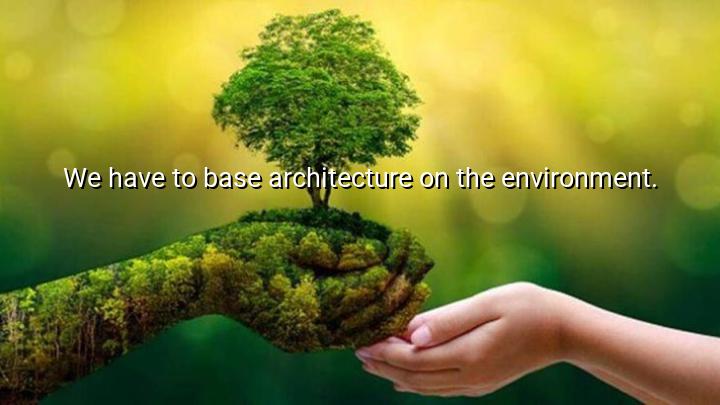




The quote "We have to base architecture on the environment." by Toyo Ito expresses a foundational principle in his architectural philosophy: that architecture should be deeply connected to and shaped by the natural environment. Ito, a renowned Japanese architect known for blending technology, nature, and human behavior, emphasizes that the built environment cannot be considered in isolation. Instead, it must respond to the climate, topography, light, wind, and ecological systems of its surroundings.
By stating that architecture must be "based on the environment," Ito calls for a shift from designing purely for function or aesthetics to designing with sensitivity and sustainability. This approach encourages architects to harmonize buildings with nature, creating structures that respect and enhance the landscape rather than dominate or disregard it. For Ito, this environmental grounding is not just practical—it's philosophical and spiritual, drawing from traditional Japanese values of simplicity and connection with nature.
Ito’s work, such as the Sendai Mediatheque or the Taichung Metropolitan Opera House, demonstrates how architecture can integrate organic forms, light, and fluid spatial concepts to echo the rhythms of the natural world. His designs often explore how people can experience architecture as a living extension of the environment, not just a shelter from it. He challenges conventional boundaries between inside and outside, creating spaces that feel open, adaptive, and dynamic.
The quote originates from Ito's reflections on sustainable architecture and contemporary urban challenges, particularly in the face of climate change and environmental degradation. As cities grow and technological advances accelerate, his message becomes increasingly relevant: true innovation in architecture lies not in opposing nature, but in learning from and building with it. This perspective places the environment not as a constraint, but as the starting point for creativity and responsibility in architectural design.

AAdministratorAdministrator
Welcome, honored guests. Please leave a comment, we will respond soon