

We have no more right to consume happiness without producing it than to consume wealth without producing it.
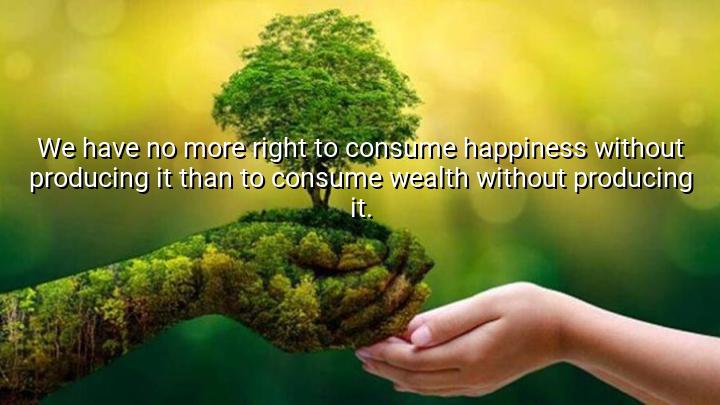




The quote "We have no more right to consume happiness without producing it than to consume wealth without producing it" by George Bernard Shaw emphasizes the idea that happiness is not a commodity that can be taken or enjoyed without effort. Shaw suggests that just as individuals must contribute to the creation of wealth through work and effort, they must also contribute to their own happiness and the well-being of others. The act of consuming happiness without producing it implies selfishness or a lack of responsibility in cultivating joy.
Shaw’s message challenges the idea of entitlement and suggests that happiness is something that requires active participation, both in creating it for oneself and for others. Just as wealth is not simply a given but a result of work and contribution, so too is happiness a product of actions, relationships, and positive choices. This perspective encourages people to take responsibility for their own happiness and avoid expecting it to be handed to them or to be something that comes without effort.
The comparison to wealth highlights the balance between taking and giving in life. Shaw points out that individuals who consume without giving back—whether it’s wealth or happiness—are not fulfilling their role in society. Both wealth and happiness require work, effort, and a sense of moral obligation to share and contribute. This view suggests that the pursuit of happiness should not be seen as a passive or one-sided experience, but as something that involves generosity, creativity, and mutual respect.
Ultimately, Shaw’s quote serves as a reminder that happiness is not just a passive state to be enjoyed but an active pursuit that requires effort, contribution, and a sense of responsibility. It encourages individuals to create joy for themselves and others, ensuring that their happiness is rooted in meaningful actions rather than simply consuming what others have created.

AAdministratorAdministrator
Welcome, honored guests. Please leave a comment, we will respond soon