

We have all witnessed, as well, family, friends, or medical workers who have chosen to provide years of loving care to persons who may suffer from Alzheimer's or other debilitating illnesses precisely because they are human persons, not because doing so instrumentally advances some other hidden objective.
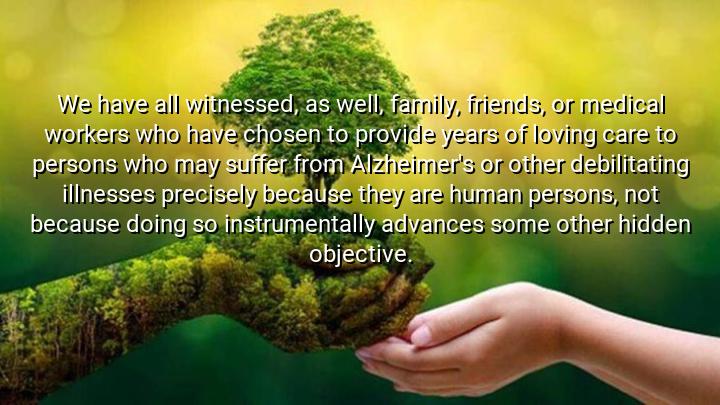




The quote "We have all witnessed, as well, family, friends, or medical workers who have chosen to provide years of loving care to persons who may suffer from Alzheimer's or other debilitating illnesses precisely because they are human persons, not because doing so instrumentally advances some other hidden objective." by Neil Gorsuch speaks to the humanity and selflessness inherent in caregiving. Gorsuch is acknowledging the deep compassion and respect that individuals, such as family members, friends, or medical workers, offer to those suffering from debilitating illnesses like Alzheimer's. He highlights that these caregivers provide care not for any material gain or personal benefit, but out of a genuine sense of human dignity and the value of life.
Gorsuch's point challenges the notion that caregiving is always driven by practical or utilitarian motives, such as financial compensation or social status. Instead, he emphasizes that true caregiving comes from a place of love, empathy, and moral duty. The caregivers he refers to provide sustained care because they see the person as a human being, deserving of respect and care, regardless of their condition. This underscores the importance of human connection in the face of illness and the moral worth of caring for someone without expecting anything in return.
The origin of this quote lies in Neil Gorsuch’s broader philosophical and judicial views, especially on issues related to human dignity, life, and morality. As a U.S. Supreme Court Justice, Gorsuch has often expressed deep interest in constitutional and ethical principles surrounding individual rights and responsibilities. His reflections on caregiving connect to his broader views on the inherent value of human life and the moral obligations that people have to one another, especially in challenging circumstances.
Ultimately, Gorsuch’s quote highlights the nobility and sacrifice involved in caregiving. It calls attention to the selfless and unconditional love that caregivers provide, affirming that the act of caring for others, especially those with debilitating illnesses, is rooted in a deep respect for their humanity, rather than any instrumental purpose. This underscores a more holistic view of care—one that values the person beyond their condition or utility.

AAdministratorAdministrator
Welcome, honored guests. Please leave a comment, we will respond soon