

We get more dangerous as we accumulate knowledge, and that's both a sadness and something to control, try to learn to live with, make terms with.
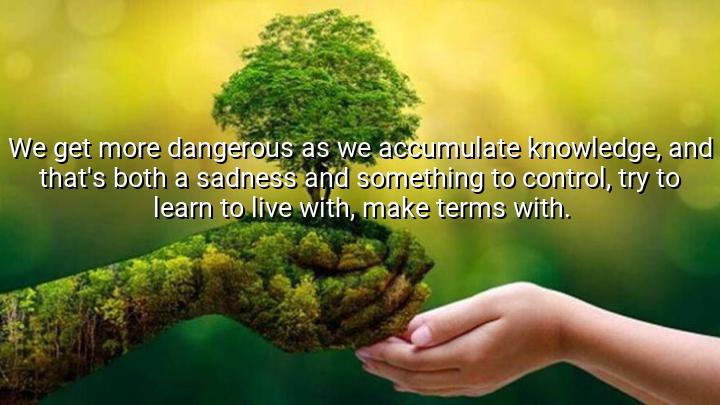




The quote by Lou Harrison, "We get more dangerous as we accumulate knowledge, and that's both a sadness and something to control, try to learn to live with, make terms with," reflects on the dual-edged nature of human intelligence. Harrison suggests that as people gain knowledge, they gain power and influence, which can be used for both constructive and destructive purposes. This increasing potential for harm carries a moral and emotional weight, hence the sadness he references.
By emphasizing the need to control and make terms with this danger, Harrison underscores the responsibility that accompanies knowledge. Awareness alone is not sufficient; individuals must consciously manage their actions, applying wisdom and ethical reflection to ensure that their growing capabilities do not lead to harm or imbalance in society.
The origin of this quote comes from Harrison’s experience as an American composer and thinker, known for blending traditional and avant-garde musical practices and reflecting deeply on human creativity and responsibility. His statement highlights a philosophical perspective on the relationship between knowledge, power, and ethical accountability, bridging artistic insight with broader human concerns.
Ultimately, Harrison’s statement serves as a cautionary reminder that knowledge is both empowering and potentially perilous. It conveys that while accumulating understanding enhances human capability, it also demands self-awareness, discipline, and moral consideration to prevent the misuse of the very tools and insights that can enrich life.

AAdministratorAdministrator
Welcome, honored guests. Please leave a comment, we will respond soon