

We design our world, while our world acts back on us and designs us.
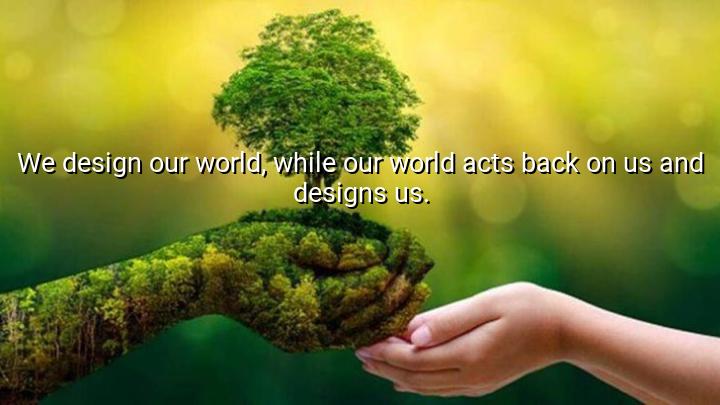




The quote "We design our world, while our world acts back on us and designs us" by Anne-Marie Willis reflects the dynamic relationship between humans and the environment. Willis suggests that design is not a one-way process; while we shape and create the world around us, the world we live in also influences and shapes us in return. This interaction can be seen in the way architecture, technology, and social systems are designed, but also how those designs affect the way we think, behave, and experience life.
Willis’ words point to the reciprocal nature of design. As designers, we create the physical spaces, tools, and systems that structure our lives. However, these very designs can also reshape our habits, thoughts, and interactions. For example, the way cities are planned can influence social behavior, while the technology we use daily impacts how we communicate and connect with others. This cyclical relationship between design and human experience emphasizes the power of design to not just shape the environment, but also transform individuals and societies.
This concept also speaks to the idea that design is not only about external aesthetics or function but also about its impact on the human condition. As we build our world, we are simultaneously influenced by the spaces, systems, and products we create. For example, the design of public spaces can promote either socialization or isolation, and the design of products can encourage either creativity or conformity.
Ultimately, Willis' quote serves as a reminder of the interconnectedness of design and life. We are not just passive recipients of the environments and systems we create; we are also actively shaped by them. This reciprocal process underscores the responsibility that designers have in shaping a world that not only serves practical needs but also nurtures positive human experiences and outcomes.

AAdministratorAdministrator
Welcome, honored guests. Please leave a comment, we will respond soon