

We can have democracy in this country, or we can have great wealth concentrated in the hands of a few, but we can't have both.
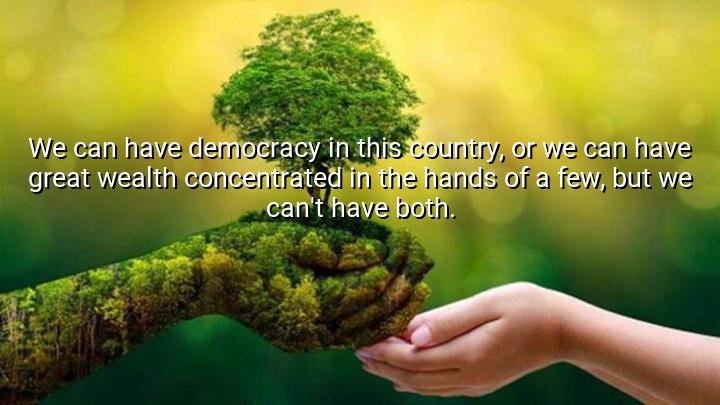




Louis D. Brandeis' quote, "We can have democracy in this country, or we can have great wealth concentrated in the hands of a few, but we can't have both," highlights the conflict between economic inequality and democratic principles. Brandeis suggests that the concentration of wealth in the hands of a few individuals or corporations threatens the very foundation of democracy, which is supposed to represent the interests of the broader population. According to this perspective, when wealth is concentrated in the hands of a few, it undermines the equality and fairness that are essential to a functioning democracy.
The origin of this quote lies in Brandeis' concerns about the growing influence of big business and the concentration of economic power in the early 20th century. Brandeis, a U.S. Supreme Court justice and advocate for social justice, was deeply concerned about how wealth inequality could skew political processes, leading to a situation where the elite could control policy-making to benefit their own interests. His words reflect his belief in the necessity of a balance between wealth and democratic values in order for both to coexist.
By stating that we can’t have both democracy and great wealth concentrated in the hands of a few, Brandeis emphasizes the dangers of unchecked capitalism and the corrupting influence that wealth can have on the political system. His argument is that democracy thrives when power is distributed and that wealth concentration inevitably leads to the erosion of democratic values such as fair representation, accessibility, and accountability.
In essence, this quote serves as a warning about the potential threat of economic disparity to the democratic system. Brandeis advocates for policies that prevent excessive wealth accumulation by a few, ensuring that political power remains in the hands of the many rather than being disproportionately influenced by the wealthy elite. His quote remains a relevant commentary on the ongoing tension between economic inequality and democratic governance.

AAdministratorAdministrator
Welcome, honored guests. Please leave a comment, we will respond soon