

We are told to let our light shine, and if it does, we won't need to tell anybody it does. Lighthouses don't fire cannons to call attention to their shining - they just shine.
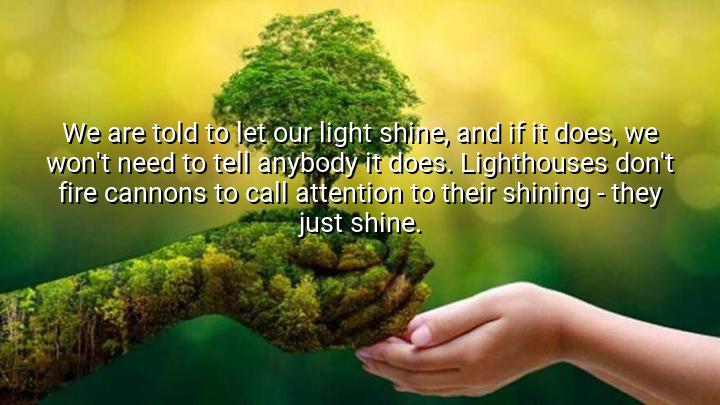




The quote “We are told to let our light shine, and if it does, we won't need to tell anybody it does. Lighthouses don't fire cannons to call attention to their shining – they just shine.” by Dwight L. Moody emphasizes the quiet yet powerful influence of living a life of faith and goodness. Moody draws from the biblical teaching of letting one’s light shine before others (Matthew 5:16), suggesting that true virtue and spiritual character do not need self-promotion. Instead, like lighthouses, a person’s actions and character will naturally guide and inspire others without loud declarations.
The origin of this statement lies in Moody’s work as a 19th-century American evangelist, preacher, and founder of the Moody Bible Institute. Known for his practical and relatable illustrations, Moody often used everyday imagery to explain spiritual truths. The lighthouse metaphor conveys his belief that the Christian life should serve as a steady and visible beacon of hope and guidance, not as something boastfully proclaimed.
The meaning of the quote is that authentic influence comes from example, not from self-advertisement. Just as a lighthouse silently fulfills its purpose by shining, individuals should live in such a way that their light—their kindness, integrity, and faith—becomes evident to all. Moody’s words remind us that humility is a core part of spiritual witness; it is through living rightly, not through seeking recognition, that people demonstrate the truth of their faith.
Ultimately, Moody’s teaching reflects his focus on practical Christianity—faith that is lived out in daily life rather than loudly proclaimed. His quote encourages believers to embody their values consistently and quietly, trusting that genuine light does not need to be announced. By comparing people of faith to lighthouses, he conveys the timeless message that steady, humble action has the greatest power to inspire and guide others.

AAdministratorAdministrator
Welcome, honored guests. Please leave a comment, we will respond soon