

We are not the same persons this year as last; nor are those we love. It is a happy chance if we, changing, continue to love a changed person.
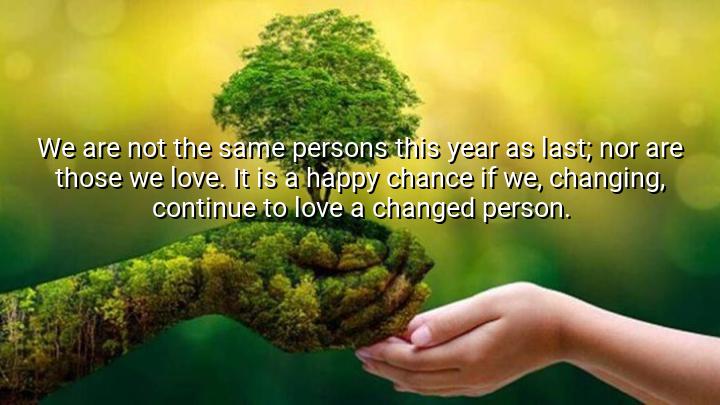




In this quote, W. Somerset Maugham reflects on the inevitable changes that occur over time, both within ourselves and in the people we love. He acknowledges that we are not the same people this year as we were the year before, highlighting the personal growth and transformations that come with time. This change is a natural part of life, and Maugham suggests that the true challenge in relationships lies in continuing to love someone even as they evolve.
Maugham points to the unpredictability of relationships, stating that it is a happy chance if, despite the changes that occur in both ourselves and those we care about, we can still find a way to maintain love and connection. This implies that love requires adaptability and acceptance, as the people we love may change in ways we didn’t expect. The idea of continuing to love a changed person speaks to the depth and resilience of true affection, which can endure through transformation.
The origin of the quote comes from W. Somerset Maugham, a famous British playwright, novelist, and short story writer. Known for his keen observations of human nature and relationships, Maugham often explored the complexities of love, desire, and personal identity in his works. This quote reflects his insightful take on the challenges and nuances of maintaining long-term relationships.
Ultimately, Maugham’s quote highlights the importance of growth and acceptance in relationships. It suggests that love is not a static emotion, but rather one that requires us to embrace the changes in ourselves and others. The quote encourages us to appreciate the fluidity of life and love, recognizing that enduring affection is often the result of mutual understanding and the willingness to change together.

VTPham Van Vi Tai
The notion of continuous change challenges the ideal of eternal sameness in love. How might this influence how people approach commitment and expectations? Could embracing change lead to more flexible, resilient relationships that evolve alongside their members?
TDNguyen Tien Dat
I wonder how this perspective applies beyond romantic relationships—to friendships, family bonds, or even self-love. Can loving a ‘changed person’ be a metaphor for forgiveness and acceptance in various aspects of life? How does this insight deepen our understanding of human connection?
KHKhungLong Huong
This quote makes me think about the tension between change and stability in relationships. To what extent should partners expect each other to remain consistent, and when should they embrace growth? How do we balance honoring past versions of loved ones with accepting their present selves?
TMTran Minh
I’m curious about the emotional challenges that come with loving a ‘changed person.’ How can couples navigate feelings of loss or unfamiliarity when their partner grows in unexpected ways? Are there strategies to foster empathy and connection despite differences that emerge over time?
Ttest
The idea that it’s a ‘happy chance’ to continue loving someone changed by time highlights the unpredictability of relationships. Does this suggest that love requires luck as much as effort? How much control do we really have in maintaining love through life’s transformations?