

We are at the very beginning of time for the human race. It is not unreasonable that we grapple with problems. But there are tens of thousands of years in the future. Our responsibility is to do what we can, learn what we can, improve the solutions, and pass them on.
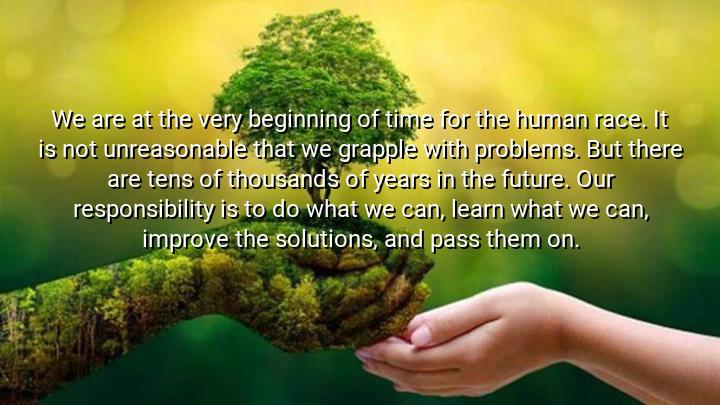




The quote by Richard P. Feynman reflects his perspective on the human race and our role in shaping the future. Feynman emphasizes that humanity is still in the early stages of its existence, describing our current time as the "very beginning" in a much larger timeline. He suggests that it is not unreasonable to expect that we will face many challenges and problems as we progress, but these obstacles should be seen as part of the natural course of our development. Feynman encourages us to keep perspective on the immense span of time ahead of us.
Feynman goes on to advocate for the importance of action in the present, suggesting that our responsibility is not to solve every issue immediately but to contribute as best we can, learning and improving along the way. The notion of passing on what we have learned and improving upon solutions suggests that progress is a collective effort, with each generation building on the achievements of the previous one. This encourages a sense of legacy and the importance of long-term thinking and responsibility.
The origin of this quote can be traced to Feynman’s broader philosophy on science and human progress. As a Nobel-winning physicist, Feynman was deeply invested in the idea that knowledge and learning are continuous processes. He believed in the importance of constantly seeking solutions, experimenting, and sharing knowledge to ensure humanity’s advancement. His focus was always on finding practical solutions while recognizing the vastness of time and the enduring nature of the problems we face.
Ultimately, Feynman’s quote emphasizes that while humanity may face numerous challenges, we are responsible for doing what we can in the present to make progress and ensure a better future. By learning, adapting, and passing on knowledge, we contribute to a continuous cycle of improvement that will shape the future for generations to come. This mindset calls for both patience and purpose as we tackle the problems of today and prepare for those of tomorrow.

AAdministratorAdministrator
Welcome, honored guests. Please leave a comment, we will respond soon