

Virtue comes by nature, learning, and practice, and thanks to virtue, all of the aforesaid may deserve approval.
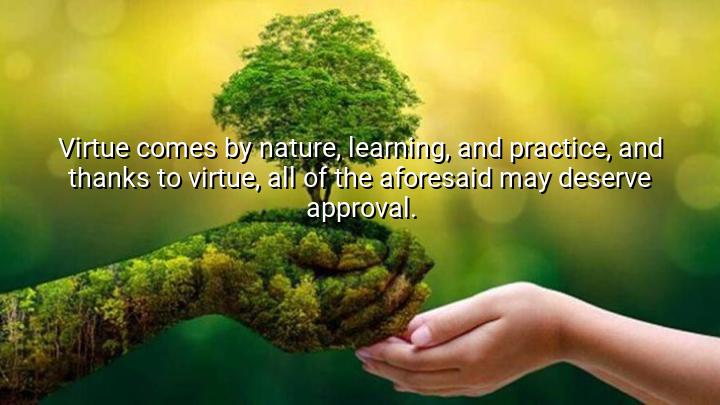




In this quote, Apollonius of Tyana explores the concept of virtue and how it is cultivated. He suggests that virtue is developed through three key elements: nature, learning, and practice. The idea is that virtue is not simply an inherent trait, but something that can be shaped and refined over time through both natural disposition and intentional effort. Nature provides the foundation, learning imparts knowledge, and practice helps to hone and perfect virtuous behavior.
The mention of learning and practice implies that virtue is not static; it requires active engagement and continuous effort to grow. Learning refers to acquiring wisdom and understanding of what is good and right, while practice refers to the habitual application of that knowledge in daily life. According to Apollonius, one must not only know what is virtuous but also regularly act on that knowledge to truly embody virtue.
Apollonius goes on to suggest that through virtue, the qualities of nature, learning, and practice are validated and deserve approval. In other words, the pursuit of virtue through these means ensures that one's actions and character align with what is morally good and worthy of respect. The approval mentioned here is not just social approval, but the deeper sense of moral worthiness that comes from leading a virtuous life.
Ultimately, Apollonius of Tyana's quote reflects his belief in the transformative power of virtue and its cultivation. By highlighting the roles of nature, learning, and practice, he encourages individuals to actively develop their virtuous qualities and live in a way that is deserving of moral approval and recognition.

AAdministratorAdministrator
Welcome, honored guests. Please leave a comment, we will respond soon