

Vanity of science. Knowledge of physical science will not console me for ignorance of morality in time of affliction, but knowledge of morality will always console me for ignorance of physical science.
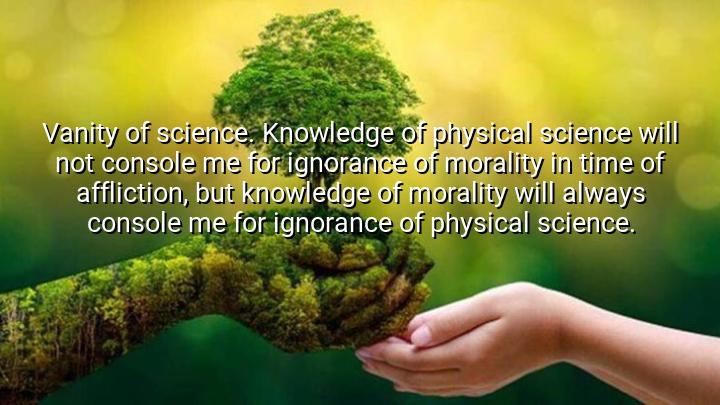




The quote, “Vanity of science. Knowledge of physical science will not console me for ignorance of morality in time of affliction, but knowledge of morality will always console me for ignorance of physical science,” is attributed to Blaise Pascal, the 17th-century French mathematician, physicist, and religious philosopher. Pascal was a brilliant scientist who made groundbreaking contributions to mathematics and physics, yet he is equally known for his profound reflections on faith and the human condition in works such as Pensées. This statement reflects his view that while science provides valuable knowledge, it cannot address the deepest needs of the soul, especially in times of suffering.
The first part, “knowledge of physical science will not console me for ignorance of morality in time of affliction,” suggests that intellectual mastery of the natural world offers little comfort in the face of personal pain, death, or existential struggles. For Pascal, morality and spiritual truth were far more essential for guiding human beings through hardship than technical or scientific facts.
The second part, “knowledge of morality will always console me for ignorance of physical science,” reverses the perspective. Even if one lacks scientific understanding, having a grounding in morality—principles of right and wrong, compassion, and spiritual wisdom—provides strength, consolation, and purpose in life’s trials. For Pascal, this moral foundation carried eternal significance, unlike the temporary satisfaction of purely intellectual achievements.
Ultimately, Pascal’s words reveal his Christian worldview, which emphasized the limits of human reason and the necessity of faith and morality. While he valued science deeply, he believed it was secondary to the pursuit of spiritual truth and moral guidance. His quote serves as a reminder that knowledge alone cannot fulfill the human heart; it must be paired with virtue and meaning to bring true consolation.

AAdministratorAdministrator
Welcome, honored guests. Please leave a comment, we will respond soon