

True enjoyment comes from activity of the mind and exercise of the body; the two are ever united.
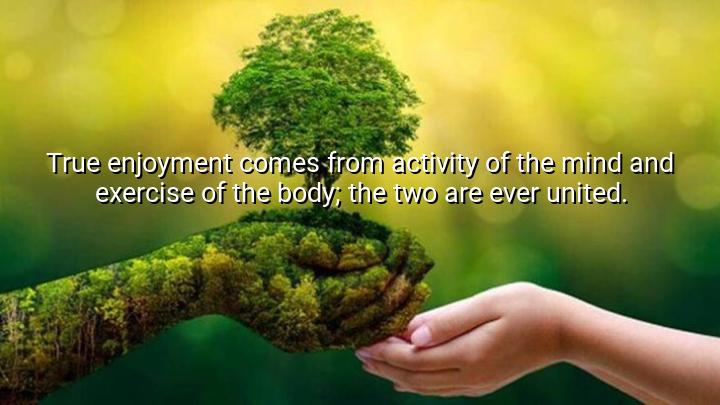




The quote “True enjoyment comes from activity of the mind and exercise of the body; the two are ever united” is attributed to Wilhelm von Humboldt, a German philosopher, linguist, and statesman from the late 18th to early 19th century. Humboldt was a major figure of the Enlightenment and a strong advocate for education, personal development, and the harmonious cultivation of both mental and physical faculties. This quote reflects his belief in the unity of mind and body as essential to human fulfillment and well-being.
The phrase emphasizes that genuine enjoyment—not fleeting pleasure but deep, lasting satisfaction—arises when both the intellect and the body are actively engaged. For Humboldt, this balance was key to a complete and meaningful life. The “activity of the mind” refers to pursuits like learning, creativity, critical thinking, and philosophy, while “exercise of the body” points to physical movement, fitness, and care for one's health.
By stating that “the two are ever united,” Humboldt suggests that the mind and body are not separate entities but deeply interconnected. Each influences and enhances the other; mental clarity can improve physical performance, while physical vitality can support sharper thinking and emotional resilience. This holistic view prefigures modern ideas in neuroscience and wellness, which continue to affirm the importance of integrating both mental and physical self-care.
Ultimately, Humboldt’s quote encourages us to strive for balance—to engage in both intellectual growth and physical activity as a way to live fully and joyfully. His message remains deeply relevant today, reminding us that true enjoyment is found not in excess or idleness, but in the active pursuit of wholeness through both thought and movement.

AAdministratorAdministrator
Welcome, honored guests. Please leave a comment, we will respond soon