

Trifles make up the happiness or the misery of human life.
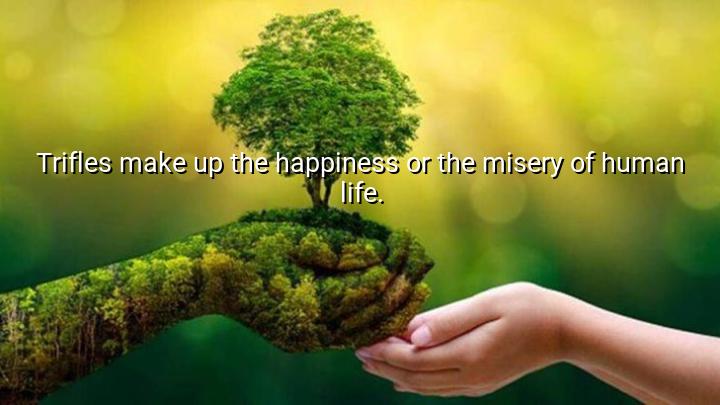




In this quote, Alexander Smith reflects on how small things, or "trifles," have a significant impact on human emotions and overall well-being. The statement suggests that the seemingly insignificant moments or actions in life can collectively shape our happiness or misery. Rather than large, dramatic events, it's the accumulation of these small, everyday occurrences that ultimately determine our emotional state and quality of life.
By using the word "trifles," Smith highlights how mundane or seemingly minor details can carry disproportionate weight in our lives. It's a reminder that our emotional responses often arise from subtle influences—a kind word, a thoughtful gesture, a fleeting disappointment—that, when added together, can affect our overall mood or outlook. This perspective encourages us to pay attention to these small moments, as they can have a lasting effect on how we experience life.
The origin of the quote likely draws from Smith's observations about the human condition and how people often overlook the importance of small gestures and moments in the hustle of everyday life. While large events certainly impact us, it is often these minor, repeated actions—whether positive or negative—that can either nurture or diminish our mental and emotional health.
In a broader sense, Smith’s quote emphasizes the idea that happiness and misery are not always the result of grand, external circumstances but are shaped by how we respond to and reflect on the small details of life. It encourages a deeper awareness of the little things that can add up to create a fulfilling or challenging emotional journey.

AAdministratorAdministrator
Welcome, honored guests. Please leave a comment, we will respond soon