

To state the facts frankly is not to despair the future nor indict the past. The prudent heir takes careful inventory of his legacies and gives a faithful accounting to those whom he owes an obligation of trust.
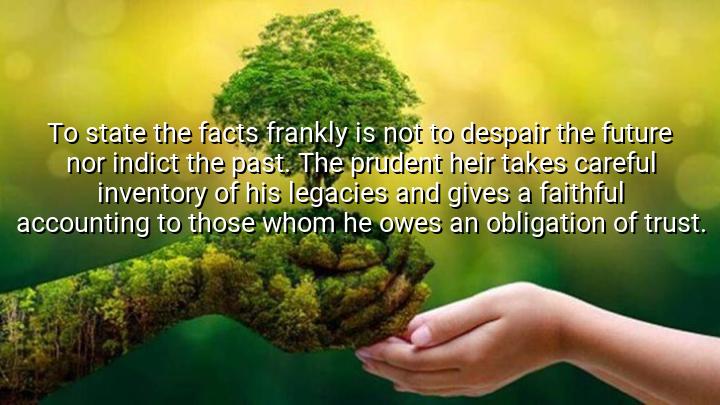




In this quote, John F. Kennedy emphasizes the importance of honesty and transparency when discussing the present and future. He argues that simply stating the facts clearly does not imply a sense of hopelessness for the future or a condemnation of the past. Instead, it is an essential step in understanding where we are and how we can move forward. By facing reality, we can better assess our current situation and plan for a more positive and constructive future.
Kennedy goes on to suggest that the prudent heir—someone who is responsible for the future—should carefully inventory the legacies they have inherited. This refers to a thoughtful and thorough examination of the strengths, weaknesses, and responsibilities passed down from previous generations. It’s not about blaming or criticizing the past, but rather about taking stock of it and understanding the obligations that come with it.
The phrase “giving a faithful accounting to those whom he owes an obligation of trust” points to the need for transparency, integrity, and responsibility. This suggests that individuals or leaders who inherit responsibilities, whether personal, political, or societal, must fulfill their obligations with honesty and respect for those who have placed their trust in them. Kennedy is advocating for a balanced approach—understanding the past, facing present challenges, and responsibly managing future opportunities.
The origin of this quote lies in Kennedy's broader political philosophy, where he consistently emphasized civic duty, responsibility, and visionary leadership. As the 35th President of the United States, Kennedy understood the importance of national legacy and the role that leaders play in shaping the future. His words reflect a call for thoughtful leadership that is rooted in both reflection on the past and accountability to future generations.

AAdministratorAdministrator
Welcome, honored guests. Please leave a comment, we will respond soon