

To look is one thing, to see is another thing; to see is very difficult, normally; to look is to try to see. I have looked and I hope I have seen.
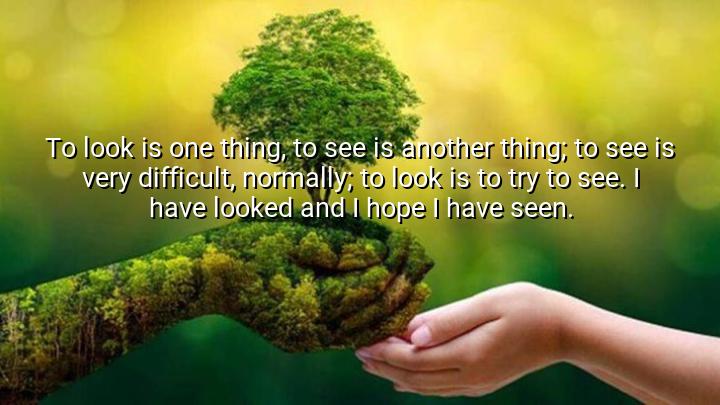




Eduardo Chillida’s quote, "To look is one thing, to see is another thing; to see is very difficult, normally; to look is to try to see. I have looked and I hope I have seen," reflects his thoughts on the deeper nature of perception and the human experience. Chillida, a Spanish sculptor, emphasizes the distinction between simply looking at something and truly understanding or perceiving it. To look implies the physical act of observing, while to see goes beyond the surface and requires deeper insight, awareness, and comprehension.
The quote suggests that while looking is a passive act, seeing requires active engagement and awareness. Seeing involves more than just the sense of sight; it involves understanding and interpreting what is observed. Chillida highlights how easy it is to simply glance at something without truly seeing it, and how difficult it is to reach that level of deeper perception that brings true understanding. This can apply not just to physical objects, but to relationships, emotions, and experiences.
Chillida's statement reflects a philosophical approach to art and life, where true understanding requires effort and contemplation. As an artist, he was deeply invested in the idea of seeing beyond what is immediately obvious, exploring the deeper meanings of the world around him. This insight speaks to his own creative process, where the act of looking at his sculptures may not be enough—true understanding comes from seeing the emotional and symbolic aspects of the work.
In essence, Chillida’s quote underscores the idea that perception is not always automatic; it requires thought, intention, and depth. The difference between looking and seeing is central to how we experience the world, and Chillida hopes that, through his efforts as both a viewer and an artist, he has been able to reach that deeper level of understanding. The quote invites reflection on how we engage with the world and encourages a more mindful approach to both observing and truly perceiving what is around us.

AAdministratorAdministrator
Welcome, honored guests. Please leave a comment, we will respond soon