

To know what you know and what you do not know, that is true knowledge.
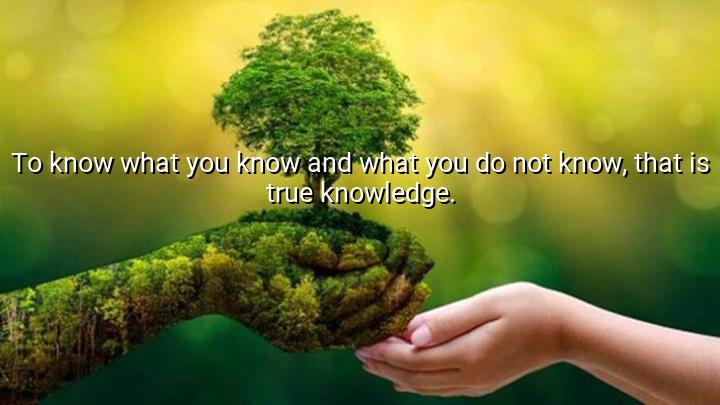




The quote “To know what you know and what you do not know, that is true knowledge” by Confucius highlights the importance of self-awareness and humility in the pursuit of wisdom. Confucius emphasizes that true knowledge is not merely about possessing facts, but about recognizing the limits of one’s understanding. Admitting what we do not know prevents arrogance, fosters curiosity, and opens the door to continued learning.
The origin of this quote comes from the teachings of Confucius, the ancient Chinese philosopher whose ideas shaped Confucianism and deeply influenced Chinese culture, ethics, and governance. His philosophy focused on virtue, education, and the cultivation of character. In a society that valued scholars and learning, Confucius reminded his students that genuine wisdom came not from claiming to know everything, but from honestly acknowledging both knowledge and ignorance.
The quote also underscores the role of discernment in intellectual growth. Many people are quick to speak with confidence, even on matters they do not fully understand. Confucius warns against this, suggesting that true wisdom lies in carefully distinguishing between what we genuinely know and what remains beyond our grasp. This clarity allows us to learn more effectively and approach the world with integrity.
Ultimately, Confucius’ insight is timeless. In both personal and professional life, the ability to recognize the limits of our knowledge is a strength, not a weakness. By combining humility with a commitment to learning, we cultivate the kind of wisdom that endures and builds trust with others. His words remain a guiding principle for anyone seeking a balanced, thoughtful, and honest approach to life.

AAdministratorAdministrator
Welcome, honored guests. Please leave a comment, we will respond soon