

To forget oneself is to be happy.
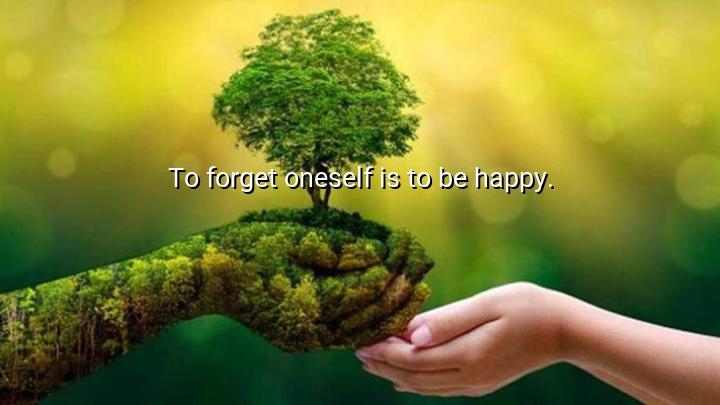




Robert Louis Stevenson’s quote, "To forget oneself is to be happy," suggests that true happiness often comes from releasing the constant focus on our own thoughts, desires, and anxieties. Stevenson proposes that when we let go of our self-centeredness and stop being overly preoccupied with our own emotions and concerns, we can experience a more peaceful and fulfilling existence. In essence, happiness arises when we shift our attention away from ourselves and focus on the world around us, our relationships, or the present moment.
The idea of forgetting oneself is rooted in the concept of selflessness. Stevenson implies that excessive self-reflection, self-criticism, or the desire for personal gain often leads to stress and dissatisfaction. By letting go of this constant focus on our own needs and instead being more open to the experiences of others or the world around us, we can experience a form of contentment that is not tied to our personal ego.
Robert Louis Stevenson, a Scottish novelist and poet, is known for his works such as Treasure Island and Strange Case of Dr Jekyll and Mr Hyde. His exploration of human nature often delves into the complexities of the self and the balance between internal and external forces. This quote reflects his understanding that true peace and happiness come when we transcend the constant chatter of our own minds.
Ultimately, Stevenson’s quote highlights the idea that happiness is not found by focusing inwardly, but by releasing our egos and being more attuned to the world outside of ourselves. When we forget ourselves, we open the door to a deeper, more expansive joy that isn’t dependent on our own narrow self-interests.

AAdministratorAdministrator
Welcome, honored guests. Please leave a comment, we will respond soon