

To be able to look back upon one's past life with satisfaction is to live twice.
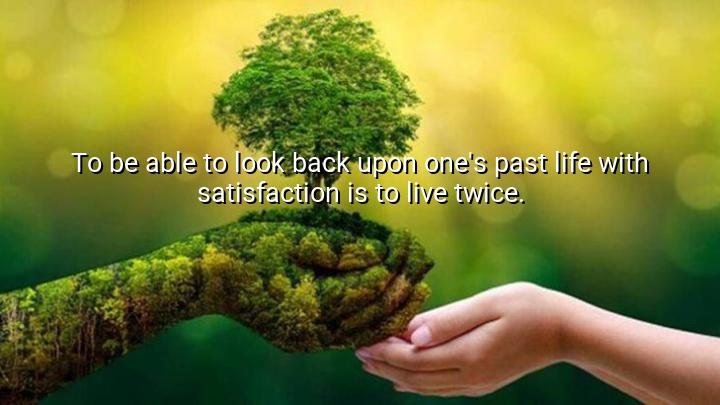




In this quote, John Dalberg-Acton, a British historian and politician, expresses the idea that reflection on one’s past with satisfaction is akin to living a second life. He suggests that being able to look back at one's experiences and feel content with how one has lived gives that life additional meaning. Instead of simply existing in the present or focusing solely on the future, reflection on a life well-lived adds layers of fulfillment. For Acton, satisfaction with the past can enrich one's sense of identity and accomplishment, making it feel as though you've had the opportunity to live more fully than just once.
Acton’s message conveys the importance of self-awareness and personal growth. He implies that a person who lives thoughtfully, makes good decisions, and finds meaning in their actions can experience a type of doubling in life’s value—first through their actual lived experience and second through the joy of having lived it well. This concept ties into his broader interest in moral responsibility and freedom, suggesting that living with integrity leads to a life that one can look back on with pride and contentment.
The origin of this quote is rooted in Acton's belief in freedom and personal integrity. As a historian, Acton was deeply concerned with issues of power, corruption, and individual responsibility. He believed that personal freedom was vital for moral development and fulfillment. For Acton, a life well-lived was not merely one of external success or wealth, but one that was aligned with personal principles and inner growth.
In essence, Acton's quote encourages us to live with intention and to approach our choices with the aim of looking back on our lives without regret. If we live with purpose and make choices that align with our values, we can achieve a sense of peace and satisfaction when reflecting on our journey—essentially, experiencing life more than once.

AAdministratorAdministrator
Welcome, honored guests. Please leave a comment, we will respond soon