

To be a human being is to be in a state of tension between your appetites and your dreams, and the social realities around you and your obligations to your fellow man.
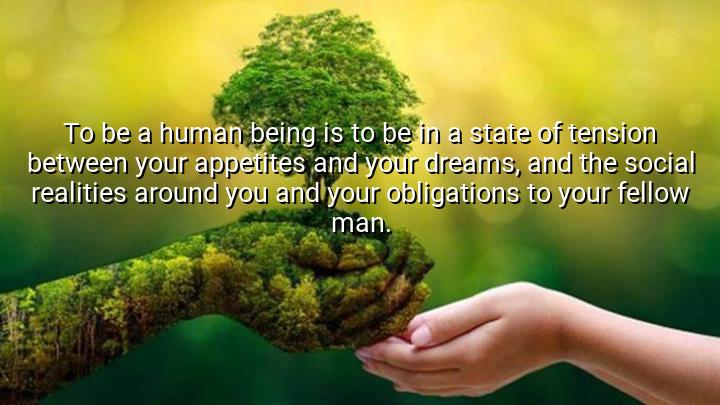




John Updike’s quote delves into the inherent tension that defines the human condition. He suggests that to be a human being is to navigate the constant pull between one’s appetites—the desires, impulses, and instincts that drive personal fulfillment—and dreams, the larger aspirations and goals that provide meaning and purpose. This conflict is not just internal but also influenced by the social realities around us, such as societal expectations, norms, and obligations to others.
Updike emphasizes that human beings are often caught between two forces: the personal desires for pleasure, success, or self-expression, and the responsibilities we have toward others. The obligations to your fellow man suggest a moral or ethical duty to consider the well-being of others, which can sometimes be at odds with personal ambitions or indulgences. This dual struggle creates a sense of tension, as individuals strive to balance personal satisfaction with the greater good.
The origin of this quote lies in Updike’s literary exploration of human nature and the complexities of life. As a writer, Updike often grappled with themes of personal conflict, morality, and societal influence, examining how these elements shape an individual’s experience. His works frequently explored the nuances of human desires, relationships, and the pressures of modern life, making this quote a reflection of his broader literary themes.
Ultimately, Updike’s quote highlights the complexity of the human experience, where the pursuit of personal dreams must be balanced with the realities of societal expectations and interpersonal obligations. It speaks to the challenges we face in reconciling our inner desires with our role in the larger social framework, underscoring the tension that is part of what it means to be human.

AAdministratorAdministrator
Welcome, honored guests. Please leave a comment, we will respond soon