

Throughout the ages it has always been possible to point to good and bad architecture.
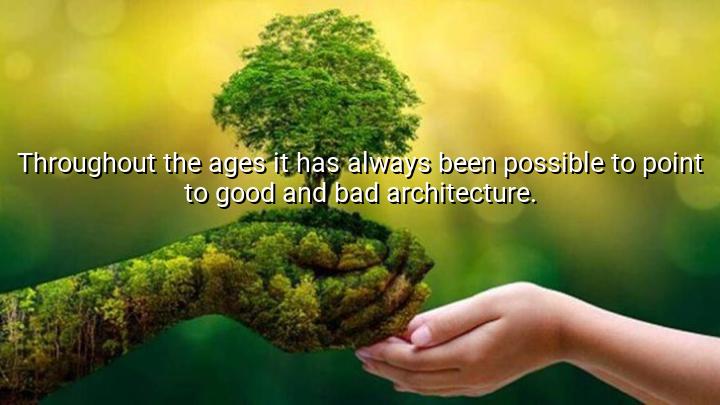




Grant Shapps’s quote — “Throughout the ages it has always been possible to point to good and bad architecture.” — conveys the enduring idea that architectural quality is not only observable but also subject to judgment, regardless of the historical period. By acknowledging both good and bad architecture, Shapps highlights that society has long evaluated buildings based on factors like functionality, aesthetics, durability, and their impact on public space. Architecture, in this view, is a cultural mirror, always open to critique and reflection.
The quote suggests that architecture is not a neutral backdrop, but a visible and influential element of civilization. From the grandeur of classical temples to the harshness of poorly planned urban housing, people have consistently made value judgments about the structures that shape their environment. These assessments are often informed by changing tastes, evolving technologies, and social needs, yet the fundamental distinction between what is considered uplifting or unpleasant architecture remains relevant.
As a British politician, Shapps likely made this statement in the context of urban development, planning policy, or heritage conservation, areas where the balance between innovation and preservation is constantly debated. His remark serves as a reminder that public officials and architects alike must consider how design decisions influence the character of communities and the well-being of individuals. Architecture isn’t just about building; it’s about creating spaces that people live in, look at, and emotionally respond to.
Ultimately, this quote underscores the idea that architectural excellence is both timeless and visible, while mistakes in design can be just as permanent and impactful. Shapps invites us to think critically about the built environment, recognizing that every generation has both celebrated architectural triumphs and lamented design failures — and that we have a responsibility to learn from both.

AAdministratorAdministrator
Welcome, honored guests. Please leave a comment, we will respond soon