

Though I do not believe that a plant will spring up where no seed has been, I have great faith in a seed... Convince me that you have a seed there, and I am prepared to expect wonders.
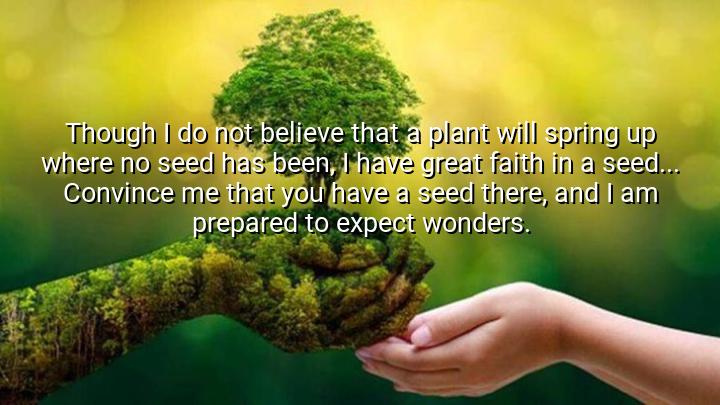




The quote by Henry David Thoreau reflects a deep appreciation for the power of potential and the importance of a solid foundation for growth. Thoreau begins by stating a practical truth: a plant cannot spring up where no seed has been planted, emphasizing that meaningful outcomes require initial effort or substance. However, he balances this realism with a strong faith in the seed itself—the small beginning that holds the promise of something greater.
Thoreau’s statement, "Convince me that you have a seed there, and I am prepared to expect wonders," highlights his belief in the transformative power of potential. If there is a genuine spark or core idea, talent, or effort—represented by the seed—then remarkable growth and achievements are possible. This reflects his transcendentalist philosophy, which values individual capability, growth, and the nurturing of inner potential.
The origin of this quote lies in Thoreau’s writings, which often explore themes of nature, self-reliance, and the human spirit. As a key figure in transcendentalism, Thoreau used natural metaphors like seeds and plants to illustrate spiritual and intellectual development. His words encourage patience, belief in beginnings, and trust in the unseen growth that can result from even the smallest starts.
Ultimately, the quote serves as a reminder that success and wonders do not come from nothing but from cultivating and believing in the initial seed—whether an idea, effort, or potential. Thoreau inspires us to recognize and nurture these seeds in ourselves and others, knowing that great things can emerge from humble beginnings.

AAdministratorAdministrator
Welcome, honored guests. Please leave a comment, we will respond soon