

Think you're escaping and run into yourself. Longest way round is the shortest way home.
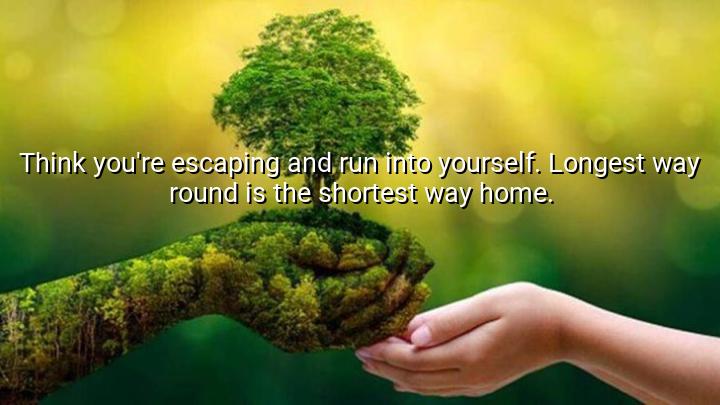




The quote "Think you're escaping and run into yourself. Longest way round is the shortest way home" by James Joyce explores the paradox of self-discovery. It suggests that no matter how much we try to escape from our problems, challenges, or even our own identity, we inevitably find ourselves confronting the very things we are trying to avoid. This illustrates the idea that running away from personal issues or struggles only leads to a deeper encounter with one's own self.
The second part of the quote, "Longest way round is the shortest way home," is a metaphor for the journey of life. It implies that sometimes, the most difficult or roundabout path is the one that leads us to where we truly need to be. Often, we try to take shortcuts or avoid challenges, but in reality, those challenges help us grow, ultimately bringing us closer to the truth or understanding of ourselves.
This idea ties into the psychological notion that personal growth often comes through confronting discomfort or pain, rather than avoiding it. Joyce, in his writing, frequently explores the tension between the outer world and inner identity, urging readers to reflect on their own life choices and the paths they take. The quote invites us to consider that the realization of our true selves often comes from the journey we resist most.
The origin of this quote lies within Joyce's works, particularly his focus on the inner workings of the human mind. In his writings, he often portrays characters who are engaged in a search for meaning or identity, and this quote is a reflection of that broader theme. It's a reminder that facing our own fears and struggles may seem like the longest route, but it's also the one that leads us home to a deeper understanding of ourselves.

AAdministratorAdministrator
Welcome, honored guests. Please leave a comment, we will respond soon