

There is so much good in the worst of us, and so much bad in the best of us, that it ill behooves any of us to find fault with the rest of us.
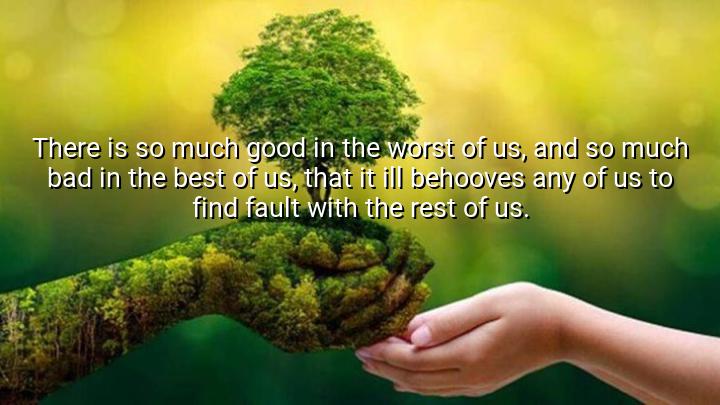




Certainly! Here’s an explanation with bolded keywords related to the quote:
This quote by James Truslow Adams speaks to the complexity and duality of human nature. He acknowledges that even the "worst of us" possess significant goodness, while the "best of us" have their own flaws and shortcomings. This recognition serves as a call for humility and compassion, reminding us that no one is perfect and that it is unwise to judge or find fault harshly in others.
The origin of the quote comes from James Truslow Adams, an American writer and historian known for coining the term "American Dream" and for his thoughtful reflections on society and human behavior. His words reflect a balanced understanding of the human condition, urging us to embrace empathy and avoid quick condemnation. Adams’ message encourages a more forgiving and realistic view of people.
At its core, the quote teaches that recognizing the mixed nature of everyone’s character should lead to greater tolerance and understanding. Adams’ insight reminds us that since everyone carries both good and bad qualities, it’s better to approach others with kindness rather than judgment. It’s a powerful call to foster unity and respect despite human imperfections.

AAdministratorAdministrator
Welcome, honored guests. Please leave a comment, we will respond soon