

There is nothing I fear more than waking up without a program that will help me bring a little happiness to those with no resources, those who are poor, illiterate, and ridden with terminal disease.
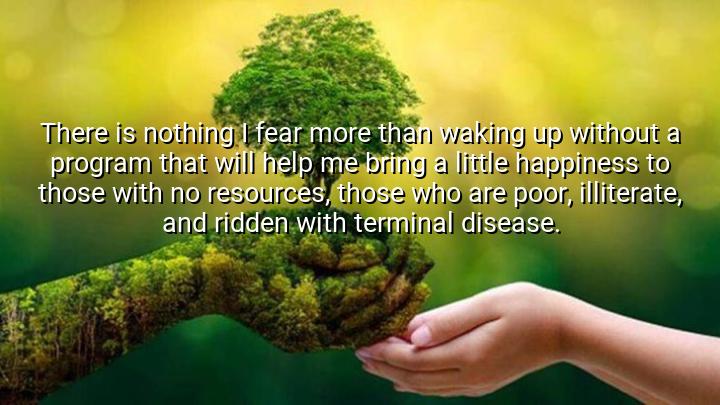




The quote "There is nothing I fear more than waking up without a program that will help me bring a little happiness to those with no resources, those who are poor, illiterate, and ridden with terminal disease" by Nelson Mandela reflects his deep commitment to social justice and the well-being of the most vulnerable people in society. Mandela expresses a fear of being without a purpose or plan that addresses the needs of the poor, illiterate, and sick. For him, the act of bringing happiness and relief to these communities was an essential part of his life's work.
Mandela’s words emphasize the importance of service to others, particularly those who are marginalized or in difficult circumstances. He feared that if he were not actively working to alleviate the suffering of others, his life would lack meaning. His fear of not fulfilling his duty to help those in need highlights his sense of responsibility and selflessness, as he dedicated much of his life to the fight for equality, human rights, and social change.
As a leader in the anti-apartheid movement and later as South Africa’s first Black president, Mandela was a symbol of hope, resilience, and compassion. His fear, expressed here, underscores his unwavering dedication to making the world a better place for the oppressed and disadvantaged. His activism and political work were driven by the desire to address systemic inequalities, improve living conditions, and promote education and health for those who needed it most.
Ultimately, this quote reminds us that true happiness and fulfillment come from contributing to the well-being of others, particularly those who are less fortunate. Mandela’s life and words encourage us to live with purpose and to recognize our role in creating a more just and compassionate world, where we actively work to support and uplift those in need.

AAdministratorAdministrator
Welcome, honored guests. Please leave a comment, we will respond soon