

There is a powerful need for symbolism, and that means the architecture must have something that appeals to the human heart. There is a powerful need for symbolism, and that means the architecture must have something that appeals to the human heart.
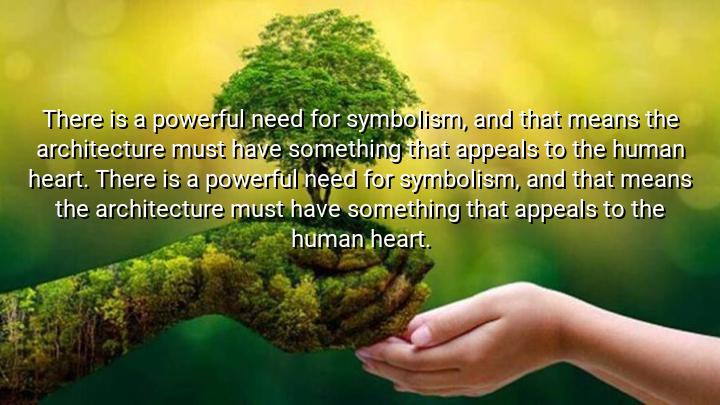




The quote by Kenzo Tange, “There is a powerful need for symbolism, and that means the architecture must have something that appeals to the human heart,” emphasizes the emotional and cultural dimensions of architecture. Tange, one of Japan’s most influential modern architects, believed that buildings should do more than provide shelter or fulfill technical functions—they should embody meaning, memory, and identity. The repetition in the quote reinforces his conviction that symbolism is not an optional luxury but a fundamental human need.
By insisting that architecture must appeal to the human heart, Tange underscores the role of emotion, aesthetics, and spiritual resonance in good design. He suggests that a successful building must evoke a sense of belonging, wonder, or respect—qualities that connect people not only to the physical space but to a shared cultural narrative. This is especially significant in contexts of post-war reconstruction or national transformation, both of which shaped much of Tange’s own architectural journey.
Tange’s work often balanced modernist innovation with traditional Japanese sensibilities, creating forms that were both forward-looking and deeply rooted in historical symbolism. Projects like the Hiroshima Peace Memorial Park and the Yoyogi National Gymnasium exemplify his ability to fuse technical mastery with symbolic expression, turning architecture into a language of healing, hope, and identity.
The origin of this quote can be traced to Tange’s reflections on architecture’s broader purpose in society. In a world rapidly urbanizing and modernizing, he championed the idea that architecture should not lose sight of its humanistic core. For Tange, the built environment must inspire, commemorate, and elevate the human spirit—a mission he fulfilled by designing buildings that resonate both structurally and symbolically.

AAdministratorAdministrator
Welcome, honored guests. Please leave a comment, we will respond soon