

There are no mistakes. The events we bring upon ourselves, no matter how unpleasant, are necessary in order to learn what we need to learn; whatever steps we take, they're necessary to reach the places we've chosen to go.
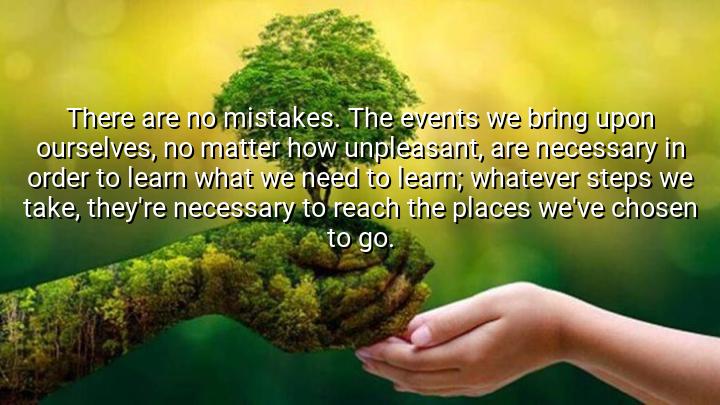




The quote, "There are no mistakes. The events we bring upon ourselves, no matter how unpleasant, are necessary in order to learn what we need to learn; whatever steps we take, they're necessary to reach the places we've chosen to go," by Richard Bach, emphasizes the idea that life experiences—even challenging or painful ones—serve a purposeful role in personal growth and learning. Bach suggests that what may seem like errors or missteps are actually opportunities to gain insight, wisdom, and understanding necessary for achieving our goals.
Richard Bach (born 1936) is an American writer and pilot, best known for his philosophical books such as Jonathan Livingston Seagull and Illusions. His work often explores themes of freedom, self-discovery, and the power of perspective. This quote reflects his belief that every life event, whether positive or negative, carries a meaningful lesson that contributes to our journey of personal development.
The statement highlights the importance of viewing challenges and mistakes not as failures, but as essential steps in the learning process. Each experience, no matter how difficult, provides insight into ourselves and the world, helping us make better choices and move closer to the destinations we aspire to reach. Bach encourages a mindset that reframes adversity as an opportunity for growth.
Ultimately, the quote serves as a reminder to embrace life’s journey with openness and trust. Bach inspires us to recognize the inherent value in every step we take, understanding that what might appear as setbacks or mistakes are often necessary for learning and achieving meaningful progress. It encourages resilience, reflection, and the belief that life is a purposeful learning process.

AAdministratorAdministrator
Welcome, honored guests. Please leave a comment, we will respond soon