

The wretched and miserable would rise into plenty of joy and happiness as soon as they climb the steps of my mosque.
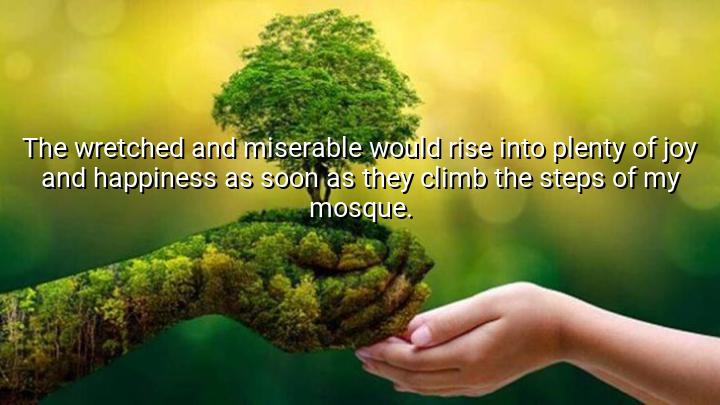




The quote by Sai Baba, "The wretched and miserable would rise into plenty of joy and happiness as soon as they climb the steps of my mosque," conveys the transformative power of faith and spirituality. Sai Baba suggests that by seeking refuge in a sacred place like his mosque, individuals who are suffering—whether emotionally, physically, or spiritually—can find peace, joy, and relief. The mosque symbolizes a place of solace, healing, and connection to the divine, offering a sanctuary where individuals can experience profound spiritual renewal.
The phrase "climb the steps" symbolizes a journey or a commitment to spiritual growth. It implies that the act of stepping into the mosque, both literally and metaphorically, is a way for individuals to rise above their challenges and hardships. It suggests that a shift in perspective and a connection with the divine can lead to emotional healing and a renewed sense of hope and happiness.
Sai Baba’s words also speak to his belief in the power of divine intervention and the idea that spiritual guidance can alleviate human suffering. Whether through prayer, meditation, or simply being in a sacred space, he emphasizes that through faith, individuals can transform their wretched or miserable states into one of peace and joy. The mosque, as a representation of divine grace, serves as a bridge to finding happiness and relief from worldly struggles.
The origin of this quote is rooted in Sai Baba’s teachings as a spiritual leader and saint in India. Known for his messages of love, compassion, and devotion, Sai Baba attracted followers from various religious backgrounds. His teachings emphasized the importance of faith, selflessness, and service to others, with the belief that through spiritual devotion, individuals could transcend their difficulties and experience true inner peace. This quote encapsulates his belief in the transformative power of spirituality in improving the lives of those in need.

AAdministratorAdministrator
Welcome, honored guests. Please leave a comment, we will respond soon