

The worst enemy of human hope is not brute facts, but men of brains who will not face them.
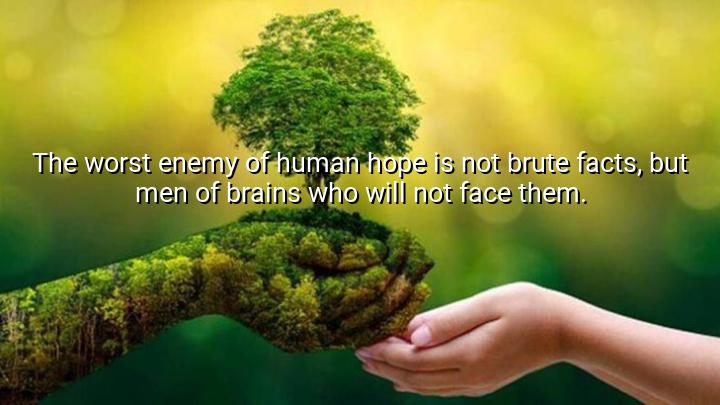




The quote "The worst enemy of human hope is not brute facts, but men of brains who will not face them" by Max Eastman highlights the dangerous influence of individuals who, despite their intellectual abilities, choose to ignore or distort the truth in favor of convenience or personal interests. Eastman, an American writer and political activist, is emphasizing that the true threat to progress and hope is not the harsh realities or facts of the world, but rather those who have the power to understand and interpret these facts yet refuse to do so. These people may avoid uncomfortable truths, which can hinder societal progress and block the potential for real solutions.
Eastman’s statement suggests that denial or ignorance of facts, especially by influential individuals, has a much more profound negative impact than the facts themselves. Facts, while sometimes harsh or inconvenient, are objective and can be addressed or solved if acknowledged. However, when individuals in positions of power or influence, especially those with considerable intellect, ignore or distort these facts, they undermine efforts for change and progress. Their refusal to face reality can create a barrier to hope, preventing positive actions from being taken.
The quote also points to the role of leadership and responsibility. Leaders or thinkers who fail to confront difficult realities, whether in politics, social issues, or human rights, contribute to the stagnation of progress. They may manipulate or avoid addressing facts because acknowledging them would challenge existing power structures or force uncomfortable changes. This results in a loss of hope for those who look to leaders for solutions and guidance.
Ultimately, Eastman’s words serve as a call for individuals, particularly those with intellectual or influential power, to confront the facts directly and act in ways that promote hope, progress, and positive change. Only by facing the truth, no matter how difficult, can society hope to move forward and overcome its challenges.

AAdministratorAdministrator
Welcome, honored guests. Please leave a comment, we will respond soon