

The water in a vessel is sparkling; the water in the sea is dark. The small truth has words which are clear; the great truth has great silence.
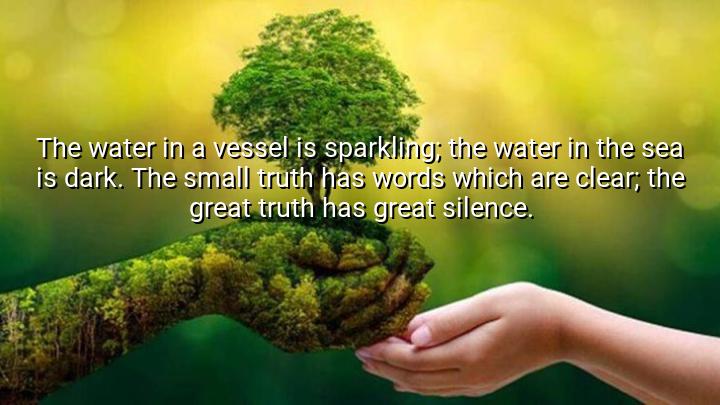




In this quote, Rabindranath Tagore uses the imagery of water to illustrate the difference between small truths and great truths. He compares the water in a vessel, which is sparkling and clear, to the water in the sea, which is dark and vast. This metaphor suggests that small truths are easily understood and visible, much like the clarity of water in a small container. In contrast, the great truth is deep and complex, like the vast, dark sea, where its full meaning is not immediately apparent.
Tagore’s mention of the small truth having clear words implies that simple truths are easily communicated and accessible to everyone. These truths are often concrete, direct, and simple to articulate. On the other hand, the great truth is something profound and often beyond verbal expression. Tagore notes that this greater truth is accompanied by silence, indicating that it cannot be fully captured by words alone. Its depth requires contemplation and understanding that transcends language.
The idea of silence in relation to the great truth also speaks to the mystical and philosophical aspects of life that can only be experienced or felt, not merely explained. Some of the most significant aspects of human existence, such as love, spirituality, and the purpose of life, cannot be fully expressed through language—they must be experienced in silence and deep reflection.
Ultimately, Tagore's quote emphasizes the idea that while simple truths are easy to grasp and communicate, the greater truths in life often require inner stillness and introspection to truly understand. It encourages a deeper exploration of life’s most profound mysteries, suggesting that the most significant truths are those that are not easily expressed but must be felt and lived.

AAdministratorAdministrator
Welcome, honored guests. Please leave a comment, we will respond soon