

The ultimate end of education is happiness or a good human life, a life enriched by the possession of every kind of good, by the enjoyment of every type of satisfaction.
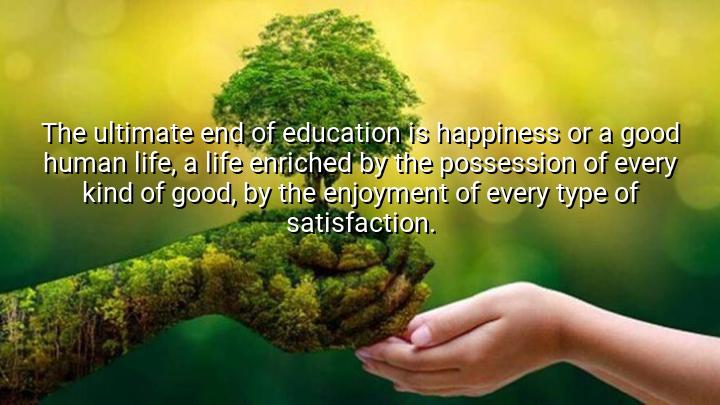




In this quote, Mortimer Adler suggests that the true purpose of education is to lead individuals toward happiness and a well-rounded, fulfilling life. According to Adler, the ultimate goal of learning is not simply to acquire knowledge or skills, but to enrich one’s life in every possible way. He emphasizes that education should not just prepare individuals for work or societal roles, but should help them achieve a good human life—one filled with meaningful experiences, satisfaction, and personal growth.
Adler's view aligns with a philosophical perspective on education, which sees it as a means of cultivating a well-rounded, virtuous person who can enjoy all aspects of life. He argues that education should foster the development of every kind of good—whether it’s intellectual, emotional, or moral—so that individuals can live a life marked by personal contentment and purpose. The quote reflects his belief that education should be a holistic experience that touches on all areas of human flourishing, not just the acquisition of facts.
The idea that education leads to happiness and satisfaction challenges a more utilitarian view of education, where the focus is placed primarily on job skills or economic success. Adler emphasizes that true happiness comes from the broadening of the mind and the deepening of personal experiences, which are best achieved through education that goes beyond practical concerns and aims for the enrichment of the whole person. In this sense, education is not just a tool for achieving external success but is a means to living a rich and satisfying life.
Originating from Adler’s views on philosophy and education, this quote reflects his belief in the purposeful nature of learning and its potential to cultivate fulfillment. As an educator and philosopher, Adler argued for a liberal education that nurtures intellectual, moral, and emotional growth. He believed that a well-rounded education would help individuals understand the true meaning of happiness and live a more enriched and purposeful life.

AAdministratorAdministrator
Welcome, honored guests. Please leave a comment, we will respond soon