

The thing is, it's not uncool to worry about people who seem like they're going on the wrong path. There's nothing cool about being self-destructive.
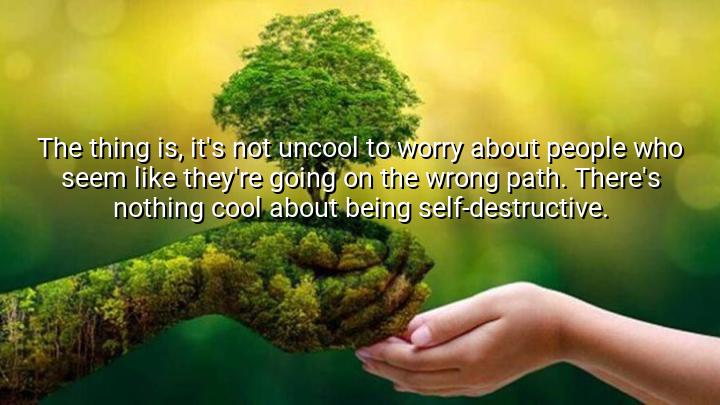




The quote "The thing is, it's not uncool to worry about people who seem like they're going on the wrong path. There's nothing cool about being self-destructive" by Patti Smith challenges the idea that caring for others and showing concern for their well-being is somehow uncool. Smith emphasizes that it is not only acceptable but important to care about people who might be making self-destructive choices. The quote advocates for empathy and responsibility rather than glorifying reckless behavior or ignoring the struggles of others.
Smith’s statement also speaks to the idea that being self-destructive is not a sign of strength or rebellion, as it might sometimes be portrayed in certain cultures or subcultures. She challenges the notion that it's cool to engage in harmful behavior, pointing out that such actions ultimately only hurt the person involved. Instead, Smith encourages a more mature and compassionate approach, where caring for someone’s well-being is seen as a positive trait, not a weakness.
The origin of this quote can be traced to Smith’s own experiences in the music and art world, where she became a prominent figure for her authenticity and rebellious spirit. Throughout her career, Smith has explored themes of individuality, resilience, and self-expression, but her words here reflect her deeper understanding of empathy and the importance of looking out for others. As someone who has seen both the highs and lows of the creative world, Smith recognizes that supporting others is far more meaningful than simply embracing chaos or destruction.
Ultimately, Smith’s quote encourages a shift in perspective about what is truly cool. Rather than glorifying self-destruction, it promotes the idea that caring for others, offering guidance, and being a force for positive change are the real marks of strength and character. The message is clear: being concerned for someone’s well-being and striving to help them find a healthier path is much more valuable than encouraging harmful behavior.

AAdministratorAdministrator
Welcome, honored guests. Please leave a comment, we will respond soon