

The right response to the non-problem of global warming is to have the courage to do nothing.
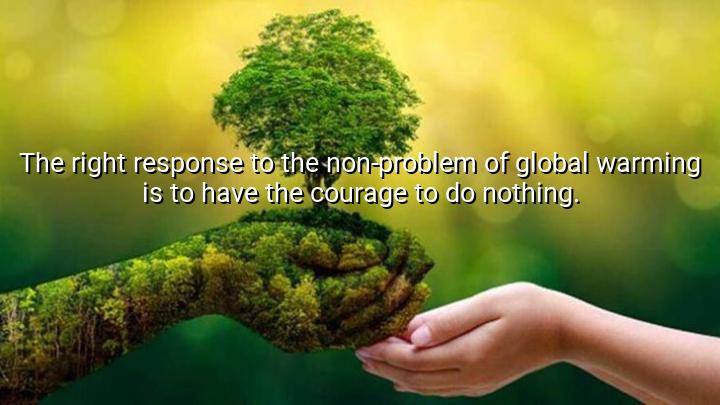




The quote by Christopher Monckton, "The right response to the non-problem of global warming is to have the courage to do nothing," reflects his skepticism about the urgency and significance of climate change. Monckton, a British political advisor and outspoken critic of the mainstream climate change movement, suggests that global warming is overstated, labeling it a non-problem. This implies that the environmental crisis is not as severe or imminent as widely claimed by scientists and activists.
The term "courage to do nothing" suggests that instead of taking drastic measures to address climate change, one should have the fortitude to resist unnecessary intervention. Monckton's perspective dismisses policies aimed at reducing carbon emissions, such as carbon taxes or large-scale environmental regulations, which he believes are misguided and potentially harmful to the economy. His argument aligns with those who argue for more skepticism and less government intervention in environmental matters.
This quote has its origins in Monckton’s critique of international climate agreements, including the Kyoto Protocol and the Paris Agreement. He believes these frameworks, intended to mitigate global warming, are misguided, economically damaging, and ultimately ineffective. By encouraging inaction, Monckton calls for a more cautious approach, challenging the prevailing narrative of imminent climate catastrophe.
Critics of Monckton argue that his views undermine the scientific consensus on climate change and delay necessary actions to mitigate its effects. Nonetheless, the quote encapsulates the debate over the severity of global warming and the appropriate response, highlighting the tension between environmental action and skepticism in the public discourse on climate policy.

AAdministratorAdministrator
Welcome, honored guests. Please leave a comment, we will respond soon