

The rich man's dog gets more in the way of vaccination, medicine and medical care than do the workers upon whom the rich man's wealth is built.
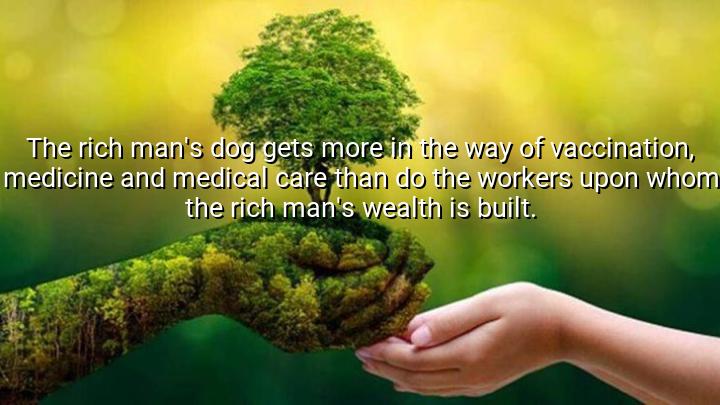




This quote by Samora Machel powerfully critiques social inequality in access to healthcare. By stating that a rich man’s dog receives better vaccination, medicine, and medical care than the workers who generate the rich man’s wealth, Machel exposes the deep injustices within economic and social systems. His words highlight the stark contrast between the privileges of the wealthy and the struggles of the working class, especially in matters of health and survival.
The use of the dog as a comparison is deliberate and provocative. It illustrates how, in an unequal society, even the pets of the wealthy can enjoy a standard of care that surpasses the basic needs of human beings who labor for them. This shocking imagery underscores the dehumanization and neglect faced by the poor, making the inequality impossible to ignore.
The origin of this perspective comes from Machel’s role as the first President of Mozambique and a lifelong revolutionary leader. Having fought against colonialism and economic exploitation, Machel witnessed firsthand how systems of power and wealth often disregarded the wellbeing of the majority. His advocacy for social justice, workers’ rights, and equitable access to resources shaped many of his speeches, which often exposed the moral failings of elitism and oppression.
Ultimately, the quote reflects Machel’s vision of a society where healthcare and human dignity are rights, not privileges. It calls attention to the moral responsibility of societies to care for their most vulnerable members rather than privileging the luxuries of the wealthy. In doing so, Machel delivers a timeless message about justice, compassion, and the urgent need to dismantle systemic inequality.

AAdministratorAdministrator
Welcome, honored guests. Please leave a comment, we will respond soon