

The reason people find it so hard to be happy is that they always see the past better than it was, the present worse than it is, and the future less resolved than it will be.
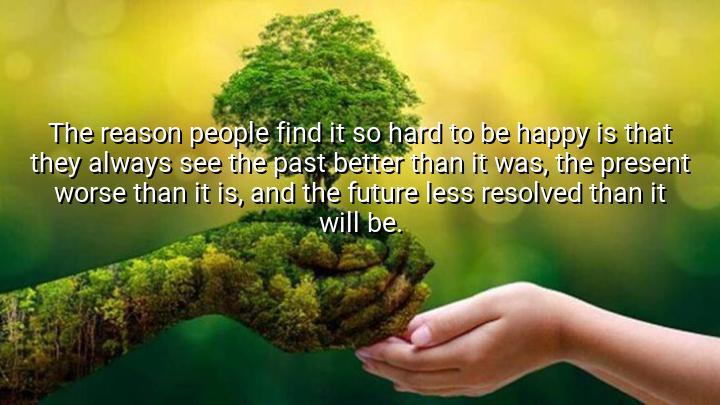




Marcel Pagnol’s quote, "The reason people find it so hard to be happy is that they always see the past better than it was, the present worse than it is, and the future less resolved than it will be," speaks to the human tendency to view life through a distorted lens. Pagnol suggests that people often idealize the past, focusing on its positive aspects while forgetting the challenges they faced at the time. Similarly, they tend to view the present in a more negative light than it deserves, and they anticipate the future with uncertainty and pessimism, which can prevent them from feeling fulfilled or hopeful.
The origin of this quote lies in Pagnol’s exploration of human nature and his understanding of how memory and expectations shape our perceptions of life. As a French writer, filmmaker, and playwright, Pagnol was deeply interested in the complexities of human emotions and the struggles individuals face when it comes to contentment. His works often delved into the realities of life and relationships, offering a reflective look at how people wrestle with their own perceptions of time and happiness.
Pagnol’s statement also reflects the broader idea of cognitive distortion, a psychological phenomenon where individuals misinterpret their experiences. By romanticizing the past and fearing the future, people may prevent themselves from fully appreciating the present moment. This view can create a sense of dissatisfaction and hinder one’s ability to recognize the potential for growth and happiness in their current circumstances.
Ultimately, Pagnol’s quote encourages a more balanced perspective on time, urging us to accept the present as it is and recognize the inherent unpredictability of the future. Instead of dwelling on an idealized past or worrying about an unresolved future, Pagnol suggests that finding contentment lies in embracing the present and understanding that life often turns out differently—often better—than we initially perceive.

AAdministratorAdministrator
Welcome, honored guests. Please leave a comment, we will respond soon