

The poor get bored the same as the rest of us. Their happiness might be as important to them as their health.
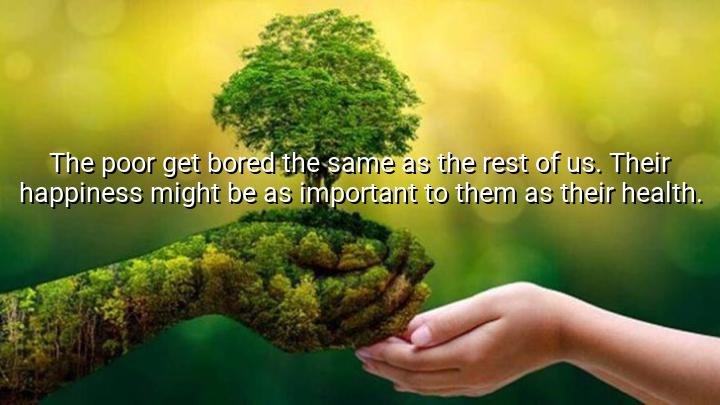




In this quote, Esther Duflo, a renowned economist and Nobel laureate, highlights the universal nature of happiness and boredom, regardless of one's socio-economic status. She points out that even those who are considered poor experience the same emotional and psychological struggles, like boredom, as wealthier individuals. The quote challenges the stereotype that poverty is solely about material deprivation, suggesting instead that emotional needs, such as the need for happiness, are equally important to everyone, regardless of their economic situation.
Duflo’s words also emphasize that happiness is a fundamental aspect of the human experience, not only for the wealthy or well-off, but for people in all walks of life. She connects happiness to health, suggesting that emotional well-being is just as crucial for the poor as their physical health. By recognizing that well-being includes both material and emotional dimensions, she invites us to rethink how we view the challenges faced by those living in poverty, making the case that their happiness and mental health deserve attention and care.
The origin of this quote comes from Esther Duflo, an economist whose work focuses on poverty alleviation and global development. Through her research, particularly on the effectiveness of social policies and interventions, Duflo has consistently advocated for a more holistic view of poverty—one that includes not only economic stability but also emotional and psychological well-being. This quote is part of her broader perspective that acknowledges the complexity of poverty and the importance of addressing both material and emotional needs in development efforts.
Ultimately, Duflo’s quote reminds us that happiness is a universal pursuit, and even those who face material hardship have the same desire for emotional fulfillment as anyone else. It highlights the importance of taking a more comprehensive approach to poverty and well-being, where both physical and emotional aspects are considered in efforts to improve people’s lives.

AAdministratorAdministrator
Welcome, honored guests. Please leave a comment, we will respond soon