

The philosophy of the school room in one generation will be the philosophy of government in the next.
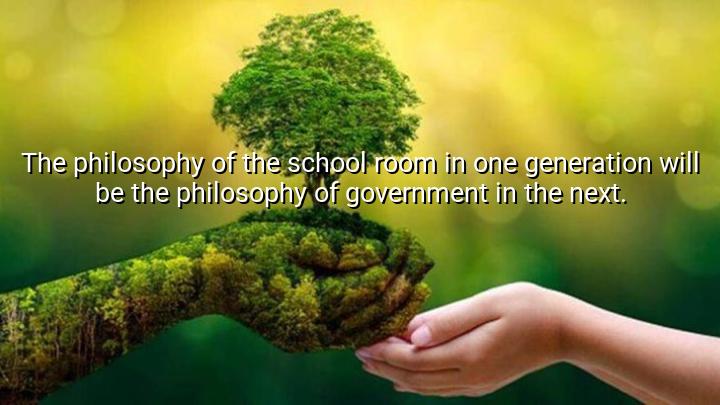




The quote "The philosophy of the school room in one generation will be the philosophy of government in the next." by Abraham Lincoln highlights the profound impact that education has on shaping the future of society and government. Lincoln is emphasizing that the values, ideas, and principles taught to children in schools will eventually influence how those individuals approach governance and political issues when they come of age. In this sense, the philosophy imparted in schools directly shapes the philosophy of the government in the following generation, as these individuals will become the voters, leaders, and policymakers.
Lincoln's statement reflects his belief in the power of education to influence both individuals and society as a whole. By ensuring that children are taught principles such as freedom, equality, and justice, a society can cultivate future leaders who are committed to upholding those ideals in government. Conversely, if education promotes ignorance or authoritarian ideas, those values may become dominant in political systems in the future.
The origin of this quote is rooted in Lincoln's understanding of the role education plays in shaping not just individuals but the broader trajectory of a nation. As a self-educated man who valued the importance of learning, Lincoln was acutely aware that the character and principles instilled in the youth of his time would have far-reaching consequences on the direction of the country. He believed that schools were the bedrock of a healthy democracy and that the next generation’s approach to governance would reflect what they learned in their formative years.
In essence, Lincoln’s quote serves as a reminder of the long-term impact of education on the future of government. It stresses that the ideals taught in schools today will shape the political landscape of tomorrow. His words underscore the importance of cultivating an informed, thoughtful citizenry that will carry forward the values that support a just and effective government.

AAdministratorAdministrator
Welcome, honored guests. Please leave a comment, we will respond soon