

The next time someone tells you we can trim the budget by cutting aid, I hope you will ask whether it will come at the cost of more people dying.
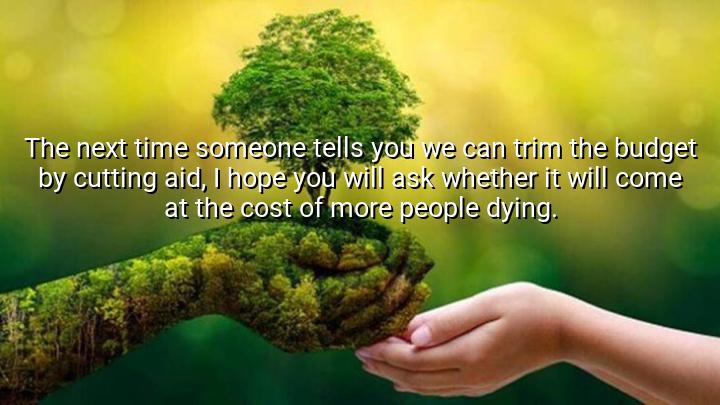




The quote "The next time someone tells you we can trim the budget by cutting aid, I hope you will ask whether it will come at the cost of more people dying" by Bill Gates highlights the ethical and humanitarian consequences of reducing financial aid, particularly in contexts where aid is critical for saving lives. Gates, co-founder of Microsoft and a philanthropist, is deeply involved in global health and development initiatives through the Bill & Melinda Gates Foundation. In this quote, he urges people to consider the human cost of budget cuts, emphasizing that cutting aid can directly impact the well-being and survival of vulnerable populations.
The origin of this quote lies in Gates's long-standing commitment to global healthcare and poverty alleviation. He has been a vocal advocate for addressing public health issues in developing countries, where access to basic medical care, nutrition, and education is often limited. Gates warns that when governments or organizations focus on reducing budgets without considering the human impact, it can lead to tragic outcomes, particularly in areas where aid plays a vital role in preventing disease, malnutrition, and death.
In this statement, Gates underscores the moral responsibility that comes with decisions about funding and budget allocations. While financial constraints are a reality, he argues that the value of human lives must be considered when deciding where to make cuts. By urging people to ask whether budget reductions will result in avoidable deaths, he calls attention to the trade-off between economic savings and the well-being of the most vulnerable individuals.
Ultimately, Gates’s quote serves as a reminder of the broader implications of financial decisions, particularly in the realm of global aid. It highlights the importance of prioritizing humanitarian needs and ensuring that aid programs remain funded, especially when they are crucial for saving lives and improving the quality of life in impoverished regions.

AAdministratorAdministrator
Welcome, honored guests. Please leave a comment, we will respond soon