

The most deadly fruit is borne by the hatred which one grafts on an extinguished friendship.
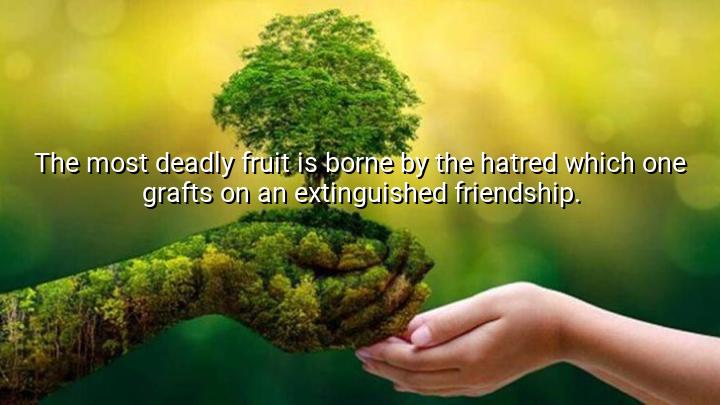




Gotthold Ephraim Lessing’s quote highlights the destructive power of hatred that arises when a friendship comes to an end. He suggests that the worst kind of resentment is not simply the hatred between strangers, but the hatred that is cultivated from a once-meaningful relationship, one that has been extinguished. When a friendship turns sour and is replaced with bitterness, the emotional consequences can be far more intense and long-lasting.
The imagery of a deadly fruit emphasizes how something that was once positive and nurturing, like a friendship, can become a source of great harm when it is tainted by negative emotions. The idea of grafting refers to the process of attaching something new (in this case, hatred) onto something that once had a different nature. The transformation of the friendship into something toxic can have far-reaching consequences, poisoning the emotions of both parties involved.
Lessing’s quote points to the emotional complexity of human relationships, where the end of a friendship can often lead to feelings of betrayal, resentment, and hatred. These emotions are particularly dangerous because they are born out of something that was once meaningful, making them more deeply ingrained and harder to overcome. The hatred that emerges from a dissolved friendship can fester and grow, causing lasting harm.
Originating from Gotthold Ephraim Lessing, a prominent German playwright and philosopher, this quote reflects his exploration of human emotions and relationships. Lessing was known for his keen insights into the nature of conflict and reconciliation, and this quote serves as a warning about the destructive potential of unresolved negative emotions in relationships. It underscores the importance of addressing conflicts and misunderstandings before they evolve into deeper animosities.

AAdministratorAdministrator
Welcome, honored guests. Please leave a comment, we will respond soon