

The most amazing philanthropists are people who are actually making a significant sacrifice.
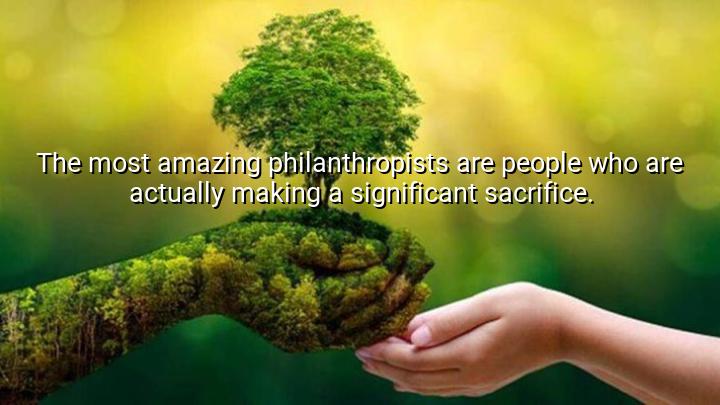




The quote "The most amazing philanthropists are people who are actually making a significant sacrifice." by Bill Gates emphasizes the value of genuine philanthropy—the idea that the most impactful charitable efforts come from individuals who are willing to make personal sacrifices for the greater good. Gates highlights that true philanthropy isn’t just about donating money, but about giving something of real value, whether it’s time, effort, or resources, which has a meaningful impact on society.
As one of the world’s most prominent philanthropists and the co-founder of the Bill & Melinda Gates Foundation, Gates understands the importance of sacrifice in charitable work. Through his foundation, he has worked to address global health issues, poverty, and education. His own efforts serve as an example of the type of sacrifice he speaks about—investing considerable time and wealth into causes that aim to solve pressing global issues. Gates believes that people who are willing to give up something significant, whether personal or financial, for a cause are the most inspiring philanthropists.
The origin of this quote likely comes from Gates’ personal experiences in the world of philanthropy. Over the years, he has learned that impactful giving requires more than just a financial donation—it requires a commitment to the cause and a willingness to sacrifice one’s own comfort or resources for the betterment of others. Gates himself has dedicated much of his wealth and time to global causes, making his words particularly meaningful as they reflect his own dedication to creating positive change.
Ultimately, Gates’ quote emphasizes the depth of commitment required in philanthropy. It suggests that the most amazing philanthropists are those who go beyond the surface of giving, offering something truly valuable that leads to lasting, tangible change. This type of sacrifice is what makes a real difference, as it demonstrates a deep personal investment in improving the lives of others.

QTQuyen Thi
I'm struck by the honesty here. In a world where philanthropy can sometimes be a PR move, Gates reminds us that true altruism is measured not just by the size of the gift, but by the cost to the giver. Should nonprofits and media platforms shift their focus to highlight stories of sacrifice more often? It might inspire more genuine forms of giving across all socioeconomic levels.
YTYen Tinh
This comment by Gates makes me curious about his own perspective—he's donated billions, but has he ever felt it as a sacrifice? Or is he admiring those who give despite not having much? There’s a clear distinction here between giving as an act of abundance and giving as an act of compassion. I’d love to hear examples of ‘significant sacrifice’ he finds most inspiring.
VNPhan Van Nghia
I find this quote deeply thought-provoking. It raises the question: does the moral weight of philanthropy increase with personal sacrifice? For instance, someone giving away 10% of a modest income arguably faces more impact than a billionaire giving away millions. It also begs a larger societal question—are we overly focused on the scale of donations instead of the intention and the cost behind them?
CTcam tu
Bill Gates raises an interesting point. I wonder if public recognition of philanthropy should prioritize those making real sacrifices rather than just the largest donations. How do we shift the narrative so that a single parent donating time at a shelter is seen as equally, if not more, heroic than a billionaire funding a new university wing? It's a powerful reminder to rethink who we label as 'amazing' givers.
HAHoai Anh
This quote makes me think about how we often celebrate wealthy philanthropists who give a portion of their riches, but overlook everyday people who donate time or money at personal cost. Should the definition of true philanthropy include the level of personal sacrifice involved? It really challenges how we measure generosity—maybe it’s not about the amount given, but about what that giving truly costs the individual.