

The hijab, or sikh turban, or Jewish skullcap are all explicit symbols, but they do not represent a threat or affront to others, and have no bearing on the competence, skills and intelligence of a person.
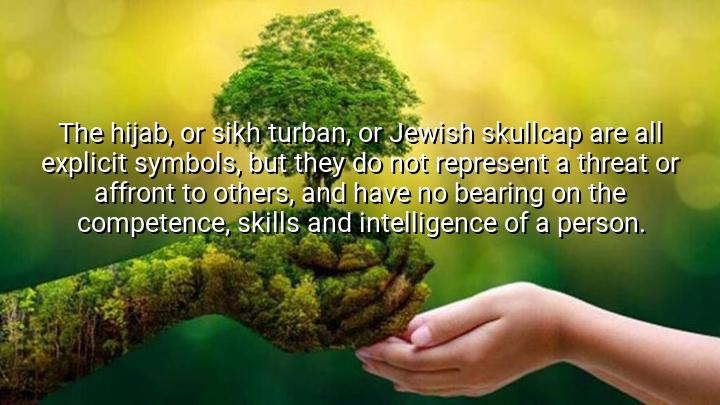




In this quote, Randa Abdel-Fattah highlights the importance of recognizing that religious symbols such as the hijab, Sikh turban, and Jewish skullcap are expressions of personal faith and identity, rather than signs of threat or hostility. She stresses that these symbols do not hold any intrinsic value in determining a person’s competence, skills, or intelligence. Abdel-Fattah’s words challenge the stereotype that people wearing such symbols are somehow less capable or threatening due to their religious choices.
Abdel-Fattah's reference to these symbols is a call for greater understanding and acceptance of diversity in both religious and cultural practices. By asserting that these symbols are not a reflection of a person’s abilities, she argues against the prejudice and discrimination that can arise from misunderstandings about faith. Her point is that one's personal or religious attire should not be a basis for judging their professional or intellectual capacity.
Furthermore, the quote advocates for tolerance and respect in a multicultural society. It suggests that people should not be judged based on their outward appearances or the symbols they wear, but rather on their merit and character. Abdel-Fattah is encouraging a shift away from biases that associate religious or cultural symbols with negative connotations, urging society to move beyond such superficial judgments.
Ultimately, Abdel-Fattah’s statement reflects her commitment to fighting discrimination and promoting equality for all individuals, regardless of their faith or background. She reminds us that religious symbols are part of an individual’s identity and should be respected, and that they do not define a person's worth or capabilities.

AAdministratorAdministrator
Welcome, honored guests. Please leave a comment, we will respond soon