

The hierarchy of relations, from the molecular structure of carbon to the equilibrium of the species and ecological whole, will perhaps be the leading idea of the future.
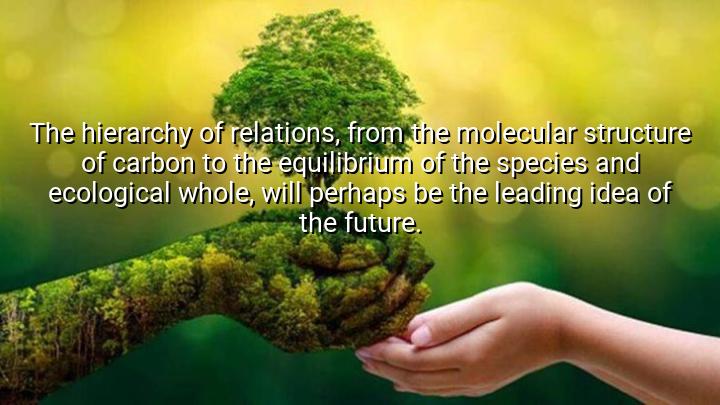




In this quote, Joseph Needham, a British biochemist and historian of science, reflects on the interconnectedness of life and the natural world. He suggests that the future will be shaped by understanding the hierarchy of relations, which begins with the molecular structure of carbon—a fundamental building block of life—and extends all the way to the broader equilibrium of species and the ecological whole. Needham is proposing that the future of science and thought will focus on the interdependencies between the smallest elements of nature and the larger systems in which they operate.
Needham’s statement highlights his belief in the importance of viewing life through a holistic lens, recognizing that the structure of molecules, the balance of species, and the stability of ecosystems are all deeply intertwined. By emphasizing the concept of a hierarchy, he suggests that understanding the relationships between these levels will be key to addressing global challenges, such as environmental sustainability and the conservation of biodiversity. This interconnected approach encourages a shift away from isolated, reductionist thinking toward a more integrated understanding of life on Earth.
The origin of this quote is rooted in Needham’s work as a historian of science, particularly his research into the development of Chinese science and his advocacy for a more comprehensive understanding of the natural world. His focus on interdisciplinary connections—spanning fields like biology, chemistry, and ecology—was groundbreaking for his time. Needham was interested in how scientific and philosophical ideas from different cultures and disciplines could work together to create a more cohesive view of the world.
Ultimately, Needham’s statement underscores the growing recognition that science must not only address individual components of life but also understand how these components fit into a larger, interconnected system. By focusing on the relationships between molecules, species, and ecosystems, future scientific inquiry may provide solutions to complex global issues and offer a more balanced and sustainable approach to life on Earth.

AAdministratorAdministrator
Welcome, honored guests. Please leave a comment, we will respond soon